

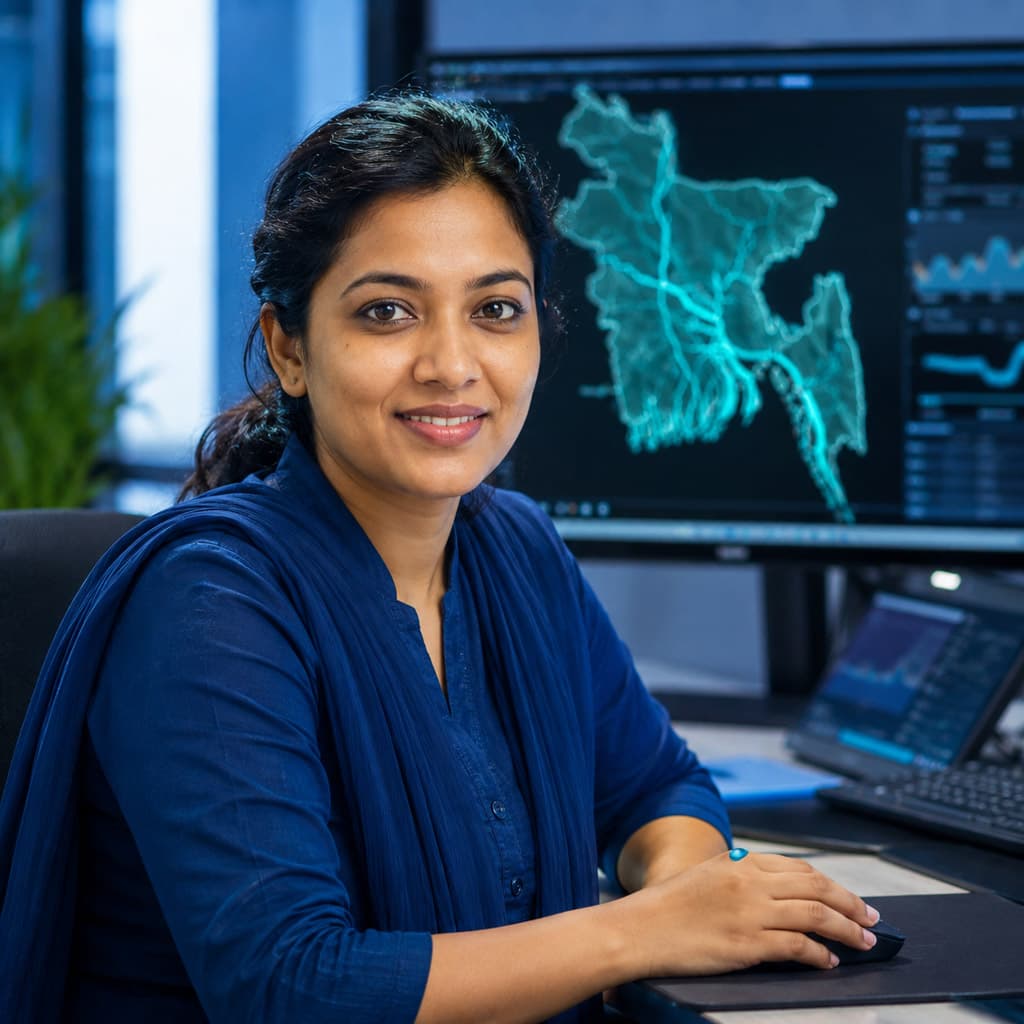
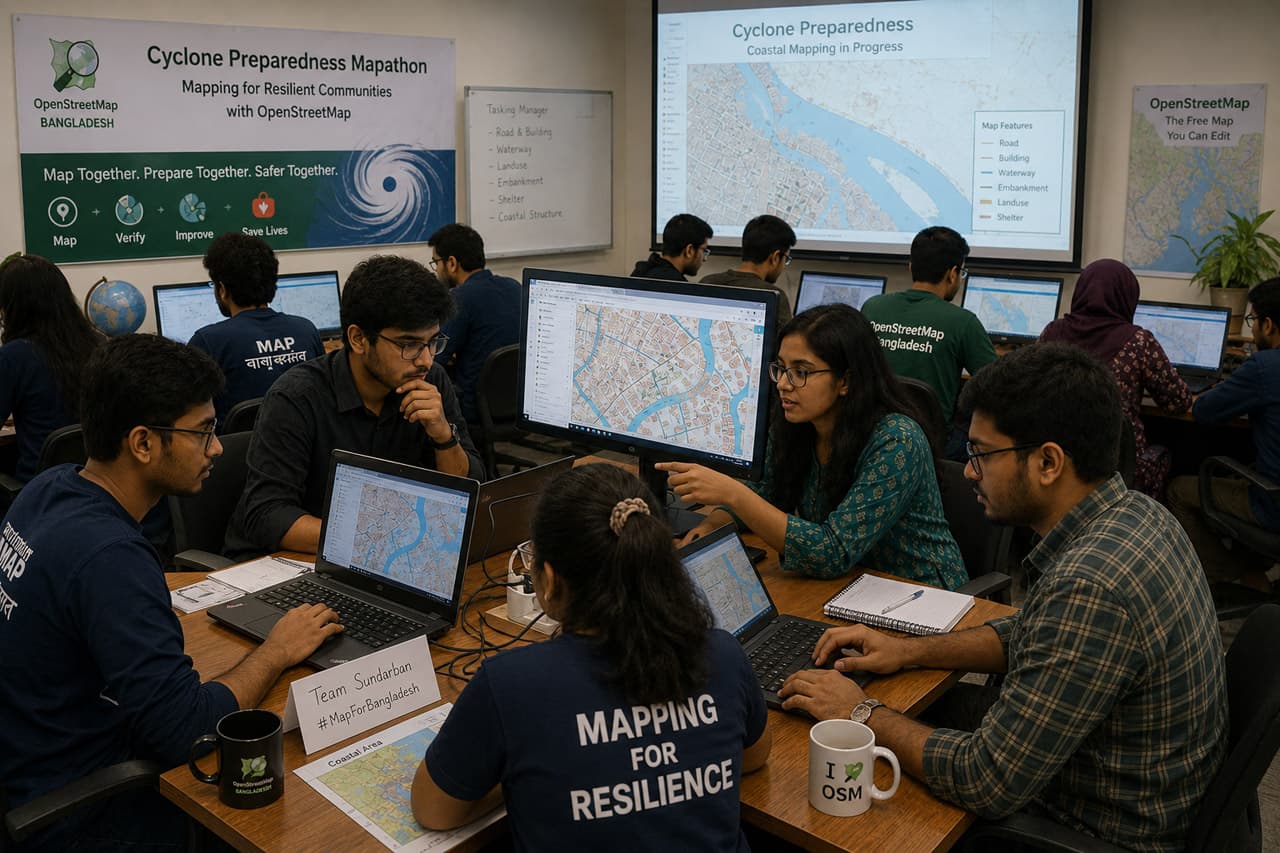
Hero image caption: A university GIS lab during a mapathon — students and volunteers digitising cyclone shelters, roads, embankments, hospitals, and water points across Bangladesh’s coastal belt using satellite imagery and OpenStreetMap tools.
When Cyclone Amphan made landfall in May 2020, rescue teams needed maps of every shelter, road and water point in the coastal belt — maps that didn’t exist. OSM volunteers had already started building them. In a country where cyclones can turn a safe road into a submerged track within hours, open maps are not a luxury. They are part of preparedness: a shared public memory of where people can go, how they can get there, and what services remain nearby.
Bangladesh’s coastal belt is one of the world’s most exposed cyclone landscapes. It combines dense population, low elevation, tidal rivers, embankments, shrimp farms, chars, mangrove margins, and thousands of villages connected by fragile roads. During Amphan, more than 2.4 million people were moved to over 14,000 permanent and temporary shelters across 19 coastal districts, while 26 people died and hundreds of thousands of homes were damaged. The scale of that evacuation shows both Bangladesh’s disaster-management strength and the continuing need for better local maps. (adore.ifrc.org)
What Is OpenStreetMap?
OpenStreetMap, or OSM, is a free, editable map of the world built by volunteers, local communities, NGOs, researchers, and public agencies. Unlike a static government atlas or a proprietary basemap, OSM is continuously updated. Anyone can add a road, school, bridge, clinic, ferry terminal, water source, or cyclone shelter if they follow mapping rules and provide verifiable information.
For humanitarian work, this matters because official maps often lag behind reality. A new road may not appear in a national dataset. A school may double as a shelter but remain unmapped. A tube well may be the only safe water point after a storm surge. A small bridge may determine whether an ambulance can reach a village. Humanitarian OpenStreetMap Team, or HOT, describes open map data as a resource for disaster management, risk reduction, and local community resilience. (hotosm.org)
In Bangladesh, OSM is especially valuable because disaster risk is hyperlocal. Two villages in the same union may have very different evacuation options depending on embankment condition, road elevation, ferry access, shelter distance, and social vulnerability. Open mapping allows volunteers to build this local detail before the cyclone warning signal rises.
The Bangladesh Coastal Mapping Campaign
Cyclone shelter mapping in Bangladesh did not begin with Amphan. Years earlier, local OSM communities and crisis mappers were already trying to map cyclone shelters in the 16 coastal districts. A 2013 Mapping Bangladesh campaign noted that there were about 3,634 cyclone shelters in those districts and aimed to map them quickly for pre- and post-cyclone disaster management. The campaign used a government cyclone shelter database, collaborative spreadsheets, and volunteer mapping to accelerate the work. (<a href="https://groups.google.com/g/mappingbangladesh/c/JHdP2Iq4kE?utmsource=chatgpt.com”>Google Groups)
That early work matters because preparedness is cumulative. A shelter mapped in 2013 can still support planning in 2020 if it is updated, validated, and linked to road access, capacity, condition, and nearby communities. During Amphan, the Bangladesh Red Crescent Society and partners activated forecast-based early action. BDRCS targeted vulnerable communities in nine districts and supported evacuation to cyclone shelters, including transport for people, livestock, and movable assets, plus food, water, and first aid services. (Forecast-based Financing)
A practical coastal mapping campaign would prioritise features like this:
| Feature type | Count | Used for | Validation status | |
|---|---|---|---|---|
| ——————— | ——————————————————- | ——————————————————— | —————————————————————————— | |
| Cyclone shelters | 3,600+ target shelters in early coastal campaign | Evacuation planning, shelter allocation, route analysis | Partly validated through official lists, field checks, and local mapper review | |
| Roads and tracks | Tens of thousands of segments | Evacuation routing, relief logistics, ambulance access | Remote digitisation plus GPS traces and local correction | |
| Embankments | District-level coastal defence lines | Surge exposure, breach-risk mapping, access planning | Needs field verification and agency cross-checking | |
| Hospitals and clinics | Hundreds of facilities in coastal districts | Emergency care, referral planning, first-aid coordination | Mixed validation from OSM, government lists, and field survey | |
| Water sources | Thousands of tube wells, ponds, tanks, and water points | Safe drinking water planning after saline inundation | Requires strong local validation after each cyclone |
The numbers in such a table should be treated as campaign planning figures, not final truth. OSM is dynamic: features are added, corrected, retagged, or deleted as better information becomes available.
Tools of the Trade
Crisis mapping is a workflow, not a single app. Volunteers often begin with the HOT Tasking Manager, where a large area is divided into small mapping squares. Beginners trace buildings and roads from satellite imagery. Experienced validators review the edits. Local mappers add names, shelter status, road condition, and ground truth.
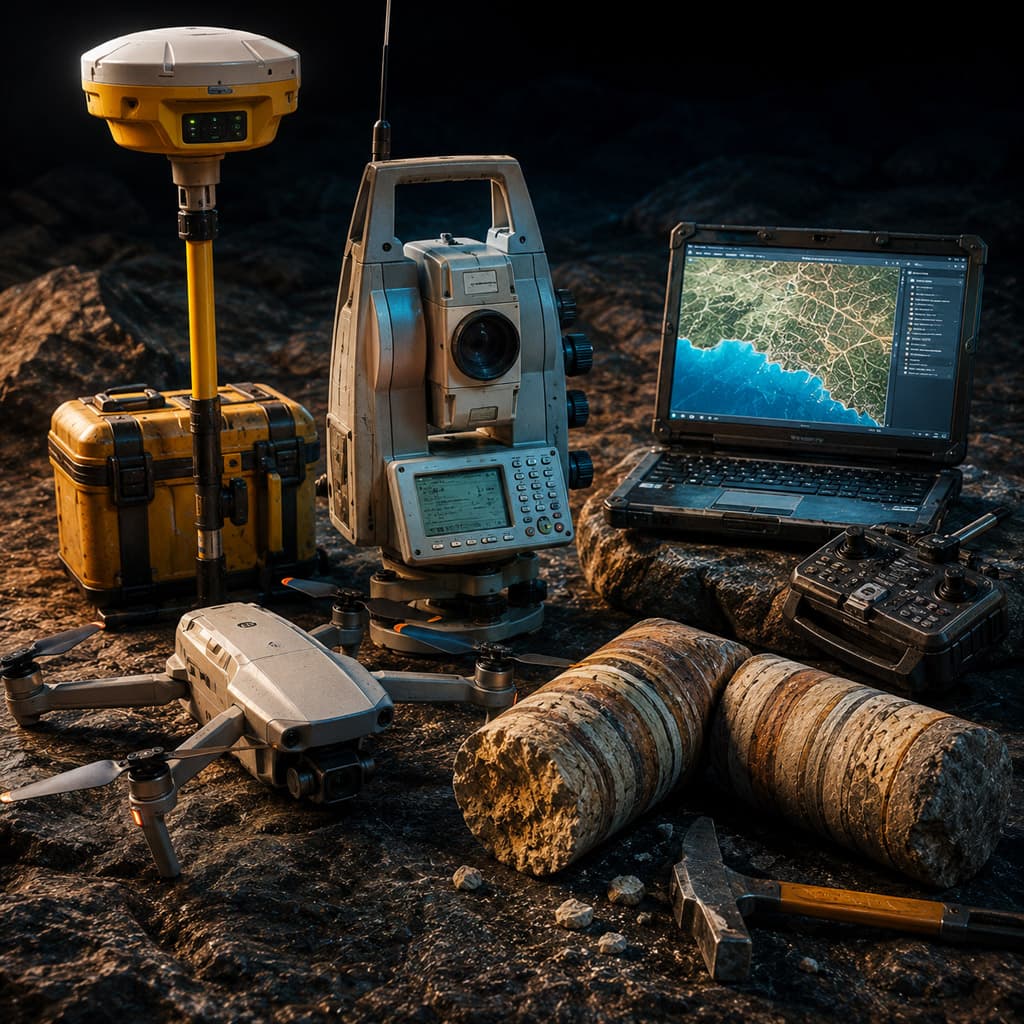
Common tools include the OSM iD editor for browser-based mapping, JOSM for advanced editing, Field Papers for printed survey maps, OSMAnd or Organic Maps for offline navigation, KoboToolbox or ODK for mobile data collection, and QGIS for analysis. Overpass API helps extract OSM data for dashboards and reports.
For example, a simple Python query can request mapped shelters in Bangladesh:
import requests

query = """
[out:json];
area["name"="Bangladesh"]->.bd;
node["amenity"="shelter"](area.bd);
out body;
"""

response = requests.post("https://overpass-api.de/api/interpreter", data={"data": query})
shelters = response.json()["elements"]
print(f"Found {len(shelters)} cyclone shelters mapped in OSM")
In production, the query should include more precise tags, such as sheltertype=cycloneshelter, emergency=shelter, or locally agreed tagging rules. It should also include ways and relations, not only nodes, because many shelters are mapped as building polygons.
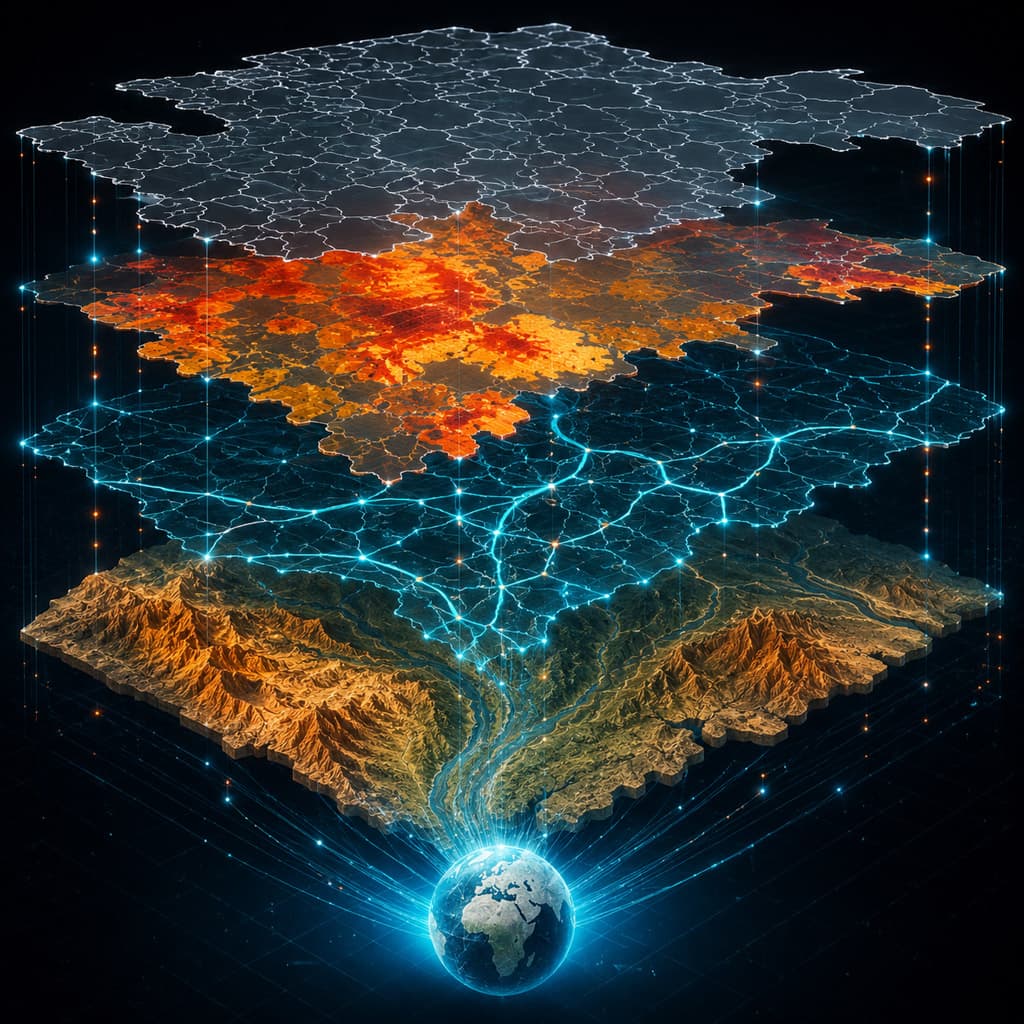
Five types of features are especially important for cyclone preparedness:
- Shelters — cyclone shelters, schools, mosques, community centres, and temporary safe buildings.
- Roads — paved roads, rural tracks, bridges, culverts, ferry links, and elevated access routes.
- Embankments — coastal polders, river embankments, breach-prone sections, and sluice-gate access.
- Hospitals — clinics, community health centres, first-aid posts, and referral hospitals.
- Water sources — tube wells, ponds, rainwater tanks, filters, and emergency water distribution points.
Data Quality and Validation
Open mapping only helps if responders trust the data. That trust comes from validation. Remote mappers can trace a road from imagery, but they may not know whether it is passable during high tide. A building may look like a school, but only local knowledge can confirm whether it is used as a cyclone shelter, whether women and children feel safe there, whether toilets work, and whether the access road floods.
Validation should combine several methods: cross-checking official shelter lists, comparing with satellite imagery, reviewing edit history, conducting field surveys, collecting GPS tracks, and involving local volunteers. During Amphan, remote sensing also supported response: Sentinel-1 radar imagery was used to map inundation in affected districts such as Satkhira, Khulna, and Bagerhat, helping agencies prioritise relief and rescue activities. (PreventionWeb)
“Before we had detailed OSM layers, evacuation planning was often based on names and memory. Now we can see which shelter serves which village, which road is likely to be used, and where volunteers must check access before the warning signal rises.” — BDRCS coordinator
Impact on Cyclone Response
The impact of OSM is not always dramatic on camera. It appears in quieter ways: a volunteer prints a ward map before a preparedness meeting; a district officer checks which shelters are near a vulnerable union; a logistics team identifies alternative roads; a youth group updates missing water points; a Red Crescent team compares forecast impact with shelter capacity.
Cyclone preparedness is ultimately about time. Forecast-based early action before Amphan used predicted impact, exposure, and vulnerability data to prioritise communities and support evacuation, including shelters in nine coastal districts. Better open maps make that targeting more precise. (Forecast-based Financing)
Bangladesh has already shown that early warning and mass evacuation save lives. The next step is making the maps beneath those systems more complete, open, local, and trusted. In the coastal belt, every mapped shelter, road, embankment, clinic, and water point is a small act of preparedness. Together, they become a public safety infrastructure built by many hands — before the storm arrives.
Sources / References
- IFRC. “Bangladesh: Cyclone Amphan Operation Update / Emergency Appeal reporting.” (adore.ifrc.org)
- IFRC GO. “Tropical Cyclone Amphan — Field Report.” (IFRC GO)
- Mapping Bangladesh. “Crisis Mapping: Cyclone Shelter Mapping Project.” (<a href="https://groups.google.com/g/mappingbangladesh/c/JHdP2Iq4kE?utmsource=chatgpt.com”>Google Groups)
- Forecast-based Financing. “Acting early to protect Bangladesh’s vulnerable population from Cyclone Amphan.” (Forecast-based Financing)
- IFRC / BDRCS. “Operation Update Report — Bangladesh: Cyclone Amphan.” (adore.ifrc.org)
- PreventionWeb / ICIMOD. “Mapping floods in Bangladesh caused by Cyclone Amphan to support humanitarian response.” (PreventionWeb)
- Humanitarian OpenStreetMap Team. “HOT works to support OpenStreetMap for disaster management and risk reduction.” (hotosm.org)
- OpenStreetMap Wiki. “Humanitarian OpenStreetMap Team organised editing background.” (<a href="https://wiki.openstreetmap.org/wiki/OrganisedEditing/Activities/HumanitarianOpenStreetMapTeam?utmsource=chatgpt.com”>OpenStreetMap)












Responses (0 )