


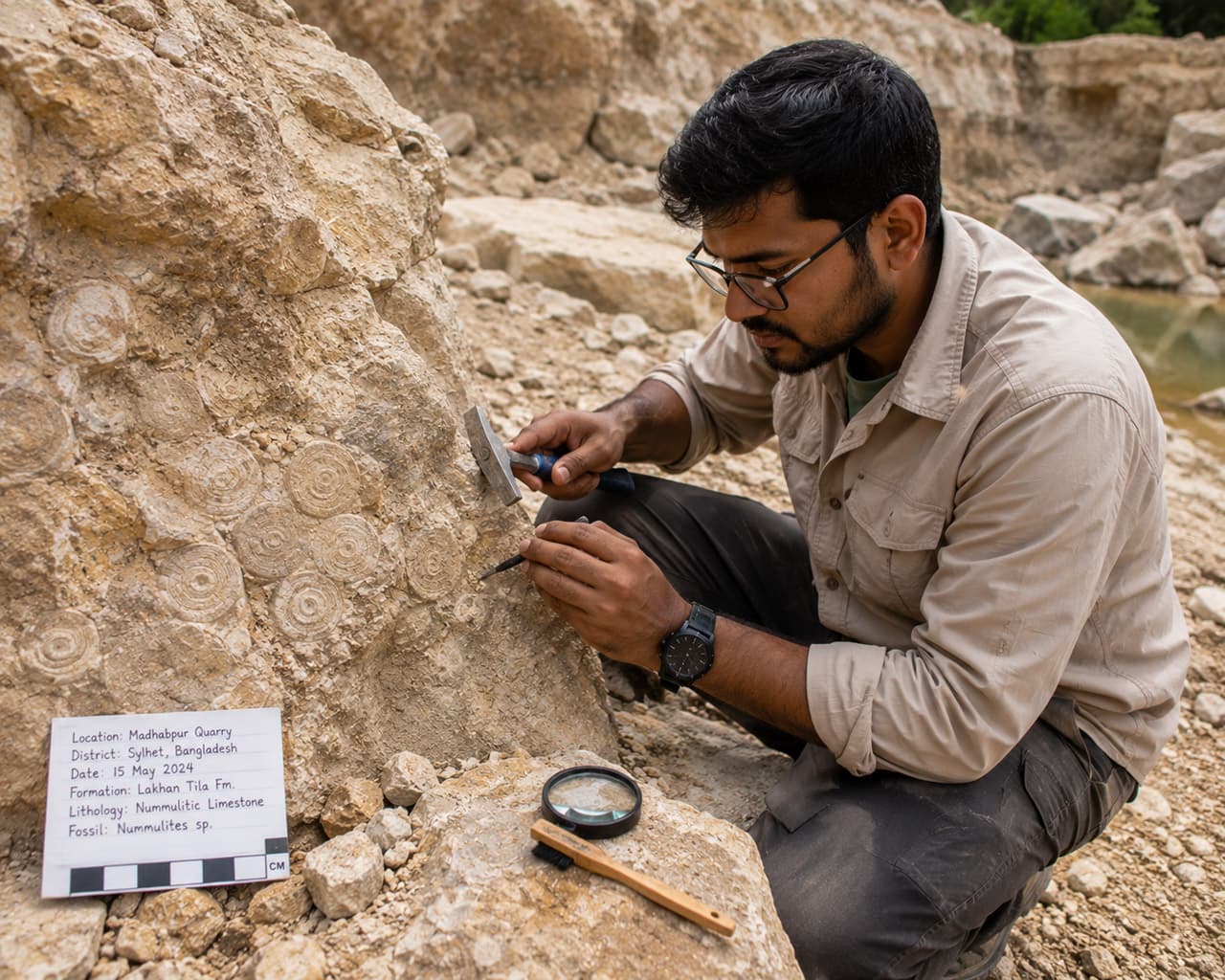
A quarry worker in Sylhet lifts a pale block of limestone from the cut face, wipes away dust with the back of his hand, and sees a small rounded pattern embedded in the rock. To him, it may look like a coin-shaped mark, a shell fragment, or simply another texture in the stone. But in that moment, he may be holding the remains of a creature that lived nearly 50 million years ago — perhaps a coral fragment, a shell, or the spiral test of a tiny marine organism from a warm shallow sea.
That is the magic of the Sylhet Limestone. In today’s Bangladesh, Sylhet is a landscape of hills, tea gardens, rivers, quarries, and monsoon rain. But during the Eocene Epoch, this region was part of a tropical marine world connected to the ancient Tethys Ocean. The limestone preserves that vanished seascape: reefs, carbonate banks, foraminiferal shoals, molluscan life, sea urchins, and lime-rich mud that slowly hardened into rock.
Photo caption: Quarry fossil excavation in Sylhet, where limestone blocks can reveal Eocene marine fossils such as nummulites, echinoids, mollusc fragments, and coral remains.
The Sylhet Limestone Formation
The Sylhet Limestone Formation is one of Bangladesh’s most important fossil-bearing rock units. It is exposed in northeastern Bangladesh, especially around Jaflong, Gwainghat, Takerghat, and adjoining areas near the Dauki River and the Meghalaya border. It also correlates with limestone units in nearby parts of northeast India, including the Jaintia, Khasi, Garo, and Mikir Hills.
Geologically, the formation belongs to the Eocene, especially the middle to late Eocene in Bangladesh. Studies describe the Sylhet Limestone and overlying Kopili Shale as containing numerous microfossils, with the Sylhet Limestone particularly known for larger foraminifera such as Nummulites, Assilina, Discocyclina, and Alveolina. Because of its abundance of nummulites, it is often called “Nummulitic Limestone.” (Bangladesh Journals Online)
The formation records carbonate deposition in an epeiric to shallow marine shelf setting. In simpler words, Sylhet was once covered by a shallow sea where lime-producing organisms flourished. The limestone includes crystalline and fossiliferous facies; fossiliferous limestone contains abundant foraminifera and other marine invertebrate remains. Later, a rise in relative sea level helped shut down the carbonate factory and allowed deeper-water shales of the Kopili Formation to accumulate above it. (<a href="https://www.iupindia.in/109/ijerssylhetlimestoneformation41.html?utm_source=chatgpt.com”>ICFAI IUP Publications)
| Geological period / epoch | Approximate age | Bangladesh-region significance | |
|---|---|---|---|
| ————————- | ————————– | —————————————————————————————————————————- | |
| Eocene | ~56–34 million years ago | Warm shallow marine conditions; Sylhet Limestone deposited with rich foraminifera and marine fossils | |
| Oligocene | ~34–23 million years ago | Transition toward more clastic sedimentation; regional marine-to-deltaic changes after carbonate deposition | |
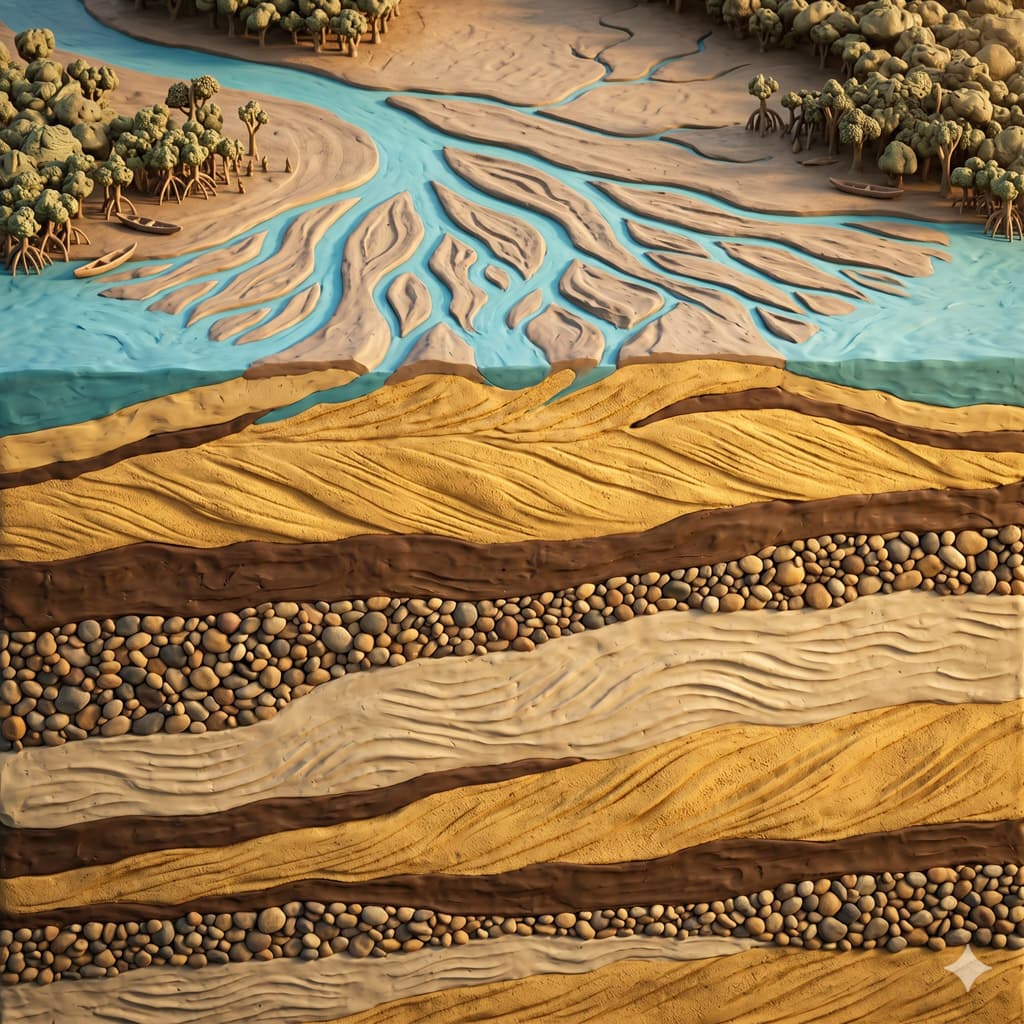
| Miocene | ~23–5.3 million years ago | Major sediment influx from rising Himalaya; Surma and Tipam successions record basin filling | |
| Pliocene | ~5.3–2.6 million years ago | Continued uplift, river reorganization, and growth of deltaic/alluvial systems leading toward modern Bengal Basin landscapes |
Creatures of the Eocene Sea
Imagine Sylhet 50 million years ago. Instead of trucks and stone yards, there is a warm, sunlit shelf sea. Carbonate sand shifts in clear water. Small waves move across lime mud. Colonies of corals and algae help build rigid patches of seafloor. Molluscs crawl and burrow. Sea urchins move across the bottom. And everywhere, in astonishing numbers, live foraminifera — single-celled organisms that build shells, or “tests,” from calcium carbonate.
The most iconic are nummulites. They are technically microfossils, but many are large enough to see with the naked eye. Their flat, coin-like shape gives them their name, from the Latin nummulus, meaning “little coin.” Nummulites are valuable index fossils because they evolved rapidly and are widespread in Eocene marine rocks across the old Tethyan realm. Their presence helps geologists date limestone layers and correlate Sylhet with other ancient marine basins. (Wikipedia)
Common fossil types associated with the Sylhet Limestone include:
- Nummulites — large benthic foraminifera, often coin-shaped and abundant in limestone.
- Echinoids — sea urchins and related forms, indicating marine benthic habitats.
- Molluscs — shells and fragments from gastropods and bivalves.
- Corals — reef or reef-adjacent organisms suggesting warm, shallow carbonate settings.
Recent work from the Sylhet Limestone in nearby Mikir Hills, Assam, has reported Eocene echinoids and interpreted them as evidence of warm, shallow marine conditions connected to the Neo-Tethys realm. Although this locality is outside Bangladesh, it strengthens the regional picture of a broad Eocene carbonate platform system extending across northeast India and the Bengal shelf. (Sage Journals)
“The first nummulite looked like a tiny stone coin in the limestone — but under the lens, its spiral chambers opened like a map of an ancient sea.”
How Fossils Form
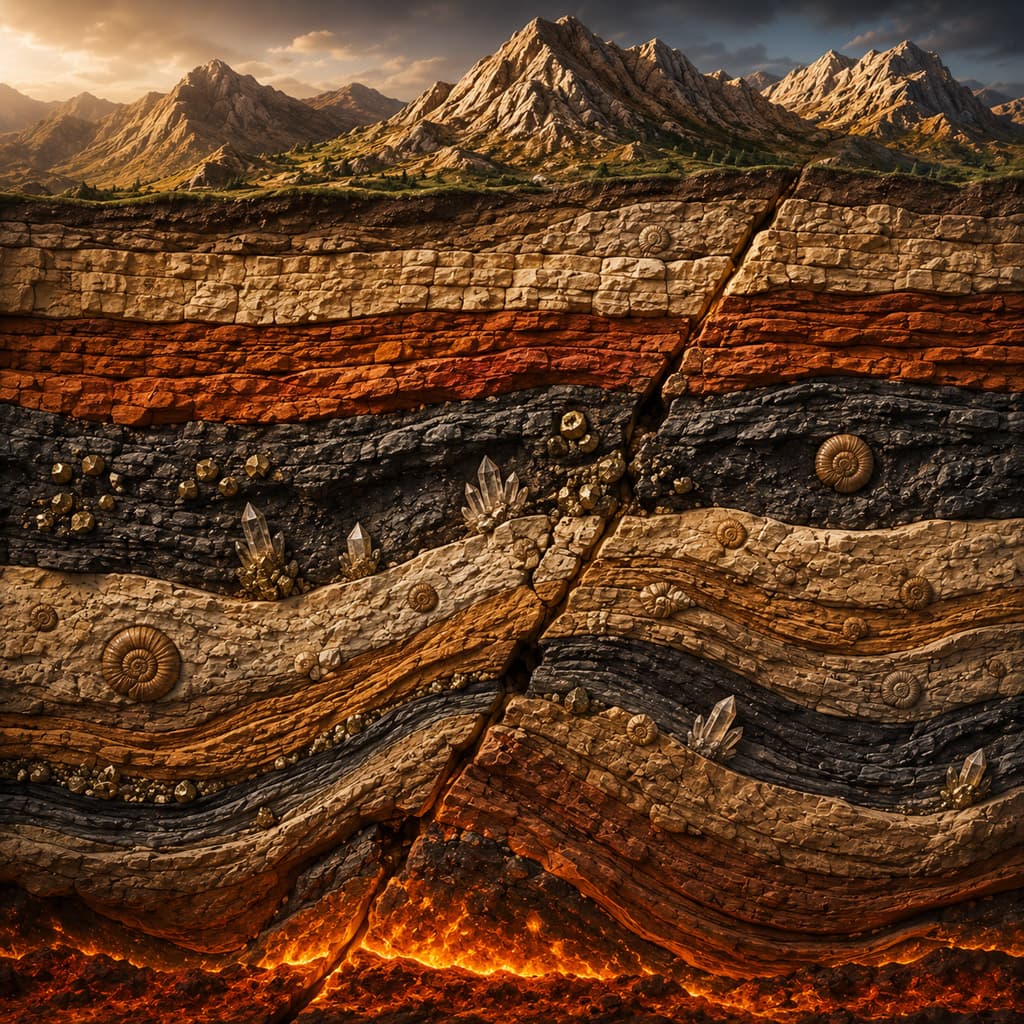
Fossilization begins with a small act of preservation. A shell falls into lime mud. A coral fragment is buried. A foraminiferal test settles among carbonate grains. If oxygen, scavengers, and currents do not destroy it, the remains may be buried deeper. Over time, sediment compacts, minerals precipitate, and loose carbonate mud turns into limestone.
The chemistry of limestone is also part of the story. Calcium carbonate can dissolve when carbon dioxide-rich water passes through it:
CaCO₃ + CO₂ + H₂O → Ca²⁺ + 2HCO₃⁻This reaction shows how limestone interacts with weakly acidic water. CaCO₃ is calcium carbonate, the main mineral in limestone and many shells. CO₂ and H₂O form carbonic acid in water, which can dissolve carbonate into Ca²⁺ and bicarbonate ions. In nature, this process helps create karst landscapes, caves, secondary porosity, and altered fossil textures. In the Sylhet Limestone, later diagenesis — the chemical and physical changes after burial — affected porosity, cementation, recrystallization, and fossil preservation. Petrographic studies describe calcite, dolomite, foraminifera, clay, quartz, and heavy minerals in the formation, along with microfacies such as micrite, sparite, pelsparite, and oosparite. (<a href="https://www.researchgate.net/publication/283614728PetrographyoftheSylhetLimestoneFormationtheDaukiRiversectionGwainghatnortheasternSylhetBangladesh?utm_source=chatgpt.com”>ResearchGate)
Some fossils remain beautifully visible; others become ghostly outlines. A nummulite may be sliced in cross-section, revealing chambers like a coiled architectural plan. A coral may survive only as a textured patch. A mollusc may dissolve away, leaving a mold later filled by mineral cement.
Reading Deep Time
The Sylhet Limestone is more than a rock unit. It is a time machine. It tells us that Bangladesh’s northeastern margin was once marine, warm, and carbonate-rich. It records a phase before the Bengal Basin became dominated by the enormous river-fed sediment load of the Himalaya. It also links Bangladesh to a wider Eocene world, when the Tethys Ocean connected marine ecosystems across what are now the Mediterranean, Middle East, South Asia, and Southeast Asia.
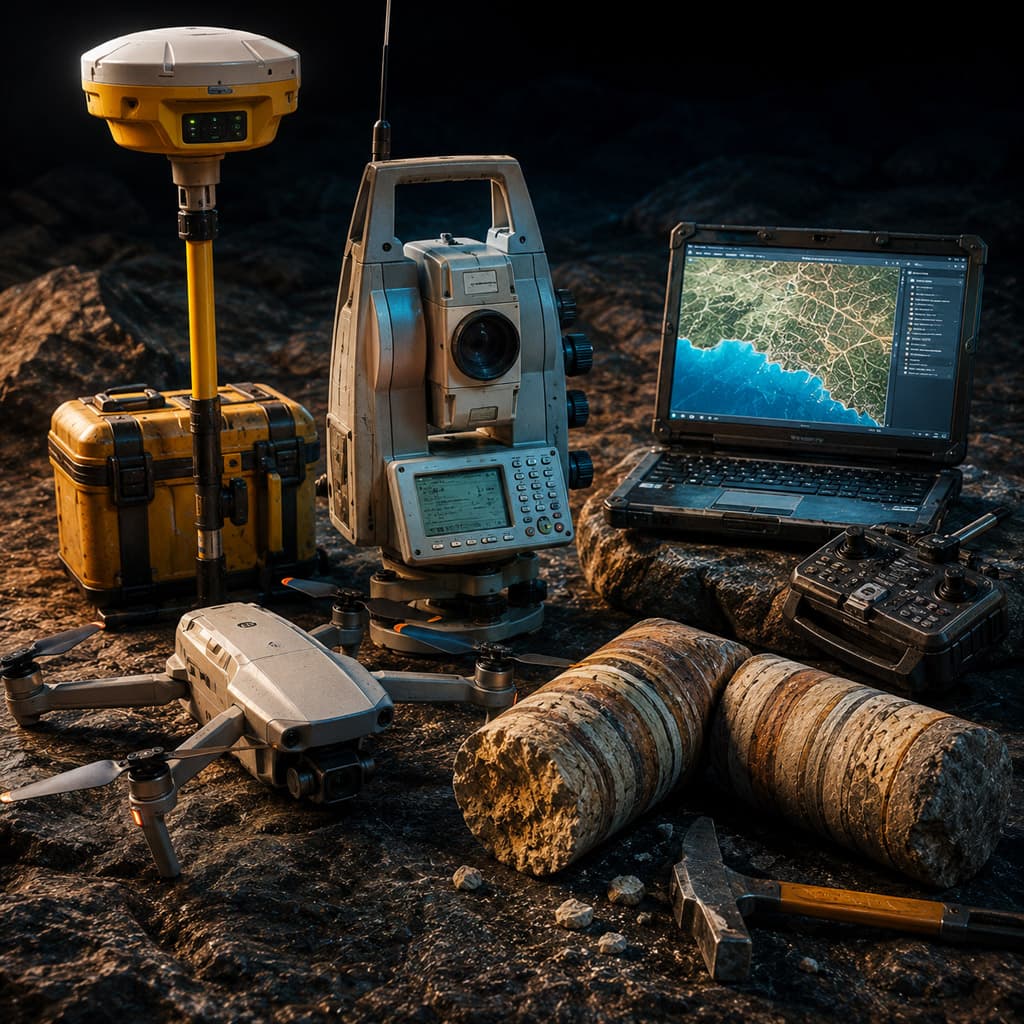
Reading this deep time requires many tools. Field geologists log the quarry faces and riverbank exposures. Paleontologists identify fossils and compare them with known Eocene species. Petrographers cut thin sections and examine limestone under microscopes. Stratigraphers connect Sylhet’s rocks with regional units such as the Kopili Formation above and older clastic formations below. Geochemists study carbonate chemistry and diagenesis. Together, they reconstruct not just an age, but an environment.
There is also a conservation message. Fossiliferous limestone outcrops in places like Jaflong are scientifically valuable but vulnerable to quarrying, erosion, and uncontrolled extraction. Researchers have described the Eocene Sylhet Limestone of Jaflong as an endangered geoheritage resource because it preserves rare, accessible evidence of Bangladesh’s ancient marine past. (<a href="https://www.researchgate.net/publication/266139574TheEoceneSylhetLimestoneofJaflongandAdjoiningAreasSylhetAnEndangeredGeoheritageinBangladesh?utmsource=chatgpt.com”>ResearchGate)
The quarry worker’s stone, then, is not just construction material. It is a page from a vanished sea. Inside it are organisms that lived before the modern Himalaya had fully risen, before the Bengal delta took its present form, before humans ever walked the floodplains. To hold a fossil from the Sylhet Limestone is to hold Bangladesh before Bangladesh — a tropical shelf sea, bright with carbonate life, quietly waiting in stone.
Sources / References
- Islam, M. N., et al. “Evaluation of Reservoir Properties of Sylhet Limestone of Jaintia Group, North-Eastern Sylhet, Bangladesh.” Dhaka University Journal of Earth and Environmental Sciences. (Bangladesh Journals Online)
- GeoLex / INDLEX. “Sylhet Formation.” (Indian Plate Lexicon)
- IUP India. “Facies and Depositional Environment of the Sylhet Limestone Formation and Kopili Formation as Exposed in the Surma Basin, Northeastern Bangladesh.” (<a href="https://www.iupindia.in/109/ijerssylhetlimestoneformation41.html?utm_source=chatgpt.com”>ICFAI IUP Publications)
- Sarkar, S. “Alveolina-dominated assemblages in the early Eocene carbonates of the Sylhet Limestone Group, NE India.” Comptes Rendus Palevol, 2019. (ScienceDirect)
- Lokho, K., et al. “First report of Eocene echinoids from the Sylhet Limestone, Mikir Hills of Assam, India.” Journal of the Palaeontological Society of India, 2023. (Sage Journals)
- Roy, D. K., et al. “Petrography of the Sylhet Limestone Formation, the Dauki River section, Gwainghat, northeastern Sylhet, Bangladesh.” (<a href="https://www.researchgate.net/publication/283614728PetrographyoftheSylhetLimestoneFormationtheDaukiRiversectionGwainghatnortheasternSylhetBangladesh?utm_source=chatgpt.com”>ResearchGate)
- Brouwers, E. M., & others. “Microfossil assemblages from the Eocene Sylhet Limestone and Kopili Formation, Sylhet District, Bangladesh.” U.S. Geological Survey Open-File Report, 1992. (U.S. Geological Survey)
- ResearchGate. “The Eocene Sylhet Limestone of Jaflong and Adjoining Areas, Sylhet: An Endangered Geoheritage in Bangladesh.” (<a href="https://www.researchgate.net/publication/266139574TheEoceneSylhetLimestoneofJaflongandAdjoiningAreasSylhetAnEndangeredGeoheritageinBangladesh?utmsource=chatgpt.com”>ResearchGate)











Responses (0 )