


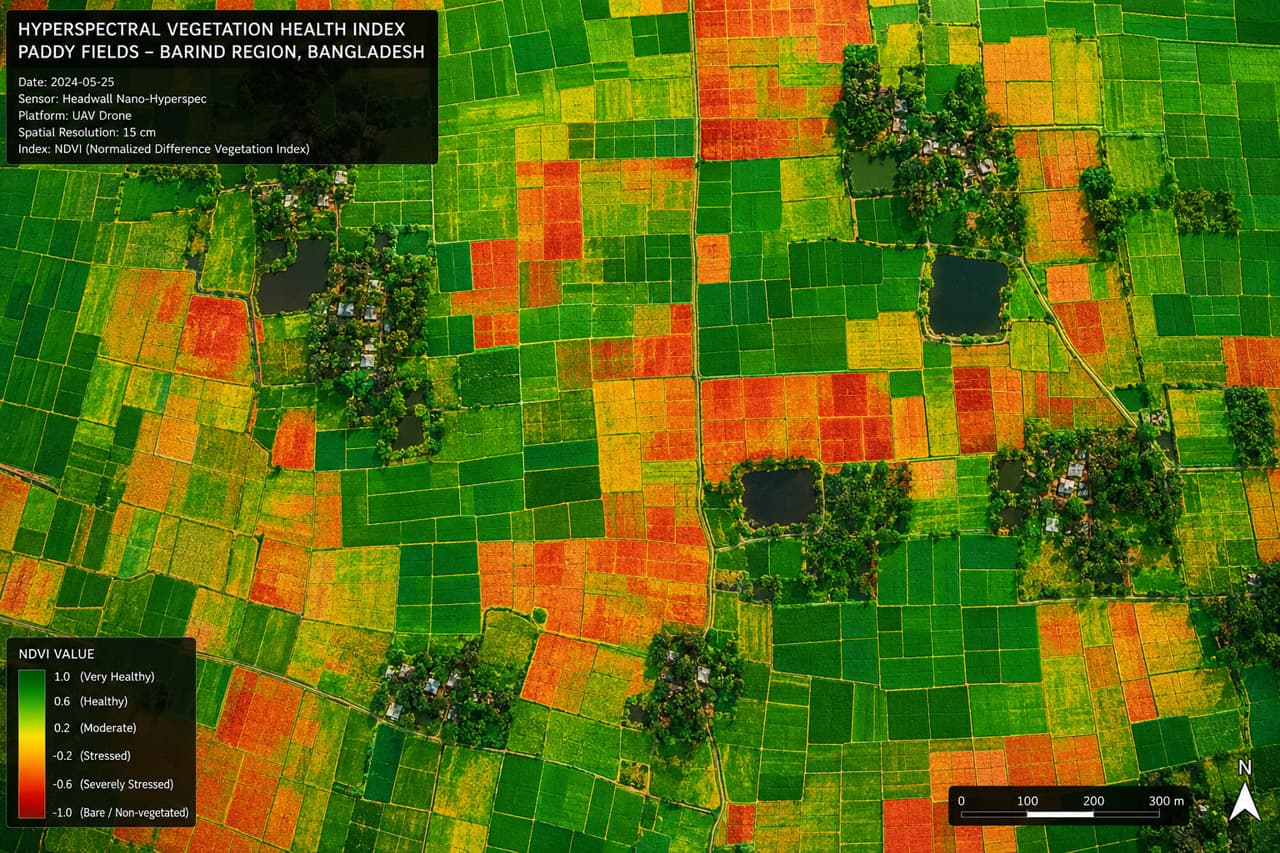
Hero image caption: Drone hyperspectral false-color image of a Barind paddy field, where healthy rice appears in bright red-edge response, water-stressed patches appear muted, and nutrient-deficient zones form subtle spectral patterns invisible in normal RGB imagery.
A drone with an ordinary camera sees a paddy field as green. A hyperspectral sensor sees it as a library — hundreds of spectral bands revealing stress, disease, and water deficit invisible to the human eye.
That difference matters in Bangladesh’s Barind agricultural zone, where rice production is tied directly to food security, groundwater, climate stress, and farmer livelihoods. To the naked eye, a Boro paddy field may look uniformly healthy until stress becomes severe. By then, leaves may already be yellowing, tillering may be reduced, and yield loss may be locked in. Hyperspectral imaging offers an earlier warning: a way to detect physiological changes before they become visible symptoms.
For agronomists, GIS analysts, and precision agriculture teams, the technology is exciting because it turns crop monitoring from visual inspection into spectral diagnosis. But the real value is practical: identifying where a farmer needs water, nitrogen, disease control, or soil testing — not across an entire field, but patch by patch.
The Barind: Bangladesh’s Rice Belt Under Stress
The Barind Tract in northwestern Bangladesh covers parts of Rajshahi, Naogaon, and Chapai Nawabganj. It is different from the floodplain-dominated image many people have of Bangladesh. The Barind is drier, slightly elevated, clay-rich, and more drought-prone. It has become agriculturally productive through irrigation, especially for dry-season Boro rice, but that success has created a water-management dilemma.
Research on groundwater irrigation in the Barind shows a long-term decline in groundwater levels associated with the expansion of irrigation. One study of Tanore Upazila reported that groundwater levels declined from the mid-1960s to 2010 as irrigated agriculture expanded, with Boro rice depending heavily on groundwater during the dry season. (<a href="https://www.scirp.org/journal/paperinformation?paperid=22010&utmsource=chatgpt.com”>SCIRP) A broader study of northwest Bangladesh found declining groundwater tables from 1981 to 2014, with Rajshahi among the most depleted districts and Boro rice area increasing substantially during the same period. (<a href="https://www.sciencedirect.com/science/article/abs/pii/S2352801X17300164?utmsource=chatgpt.com”>ScienceDirect)
This is why crop health monitoring in Barind cannot be treated as a luxury. If farmers apply too much irrigation, groundwater stress worsens. If they apply too little, yields suffer. If nitrogen is applied uniformly, some areas receive too much while deficient patches remain underfed. Hyperspectral imaging can help move management from “same treatment everywhere” to “right treatment in the right place.”
What Hyperspectral Imaging Is
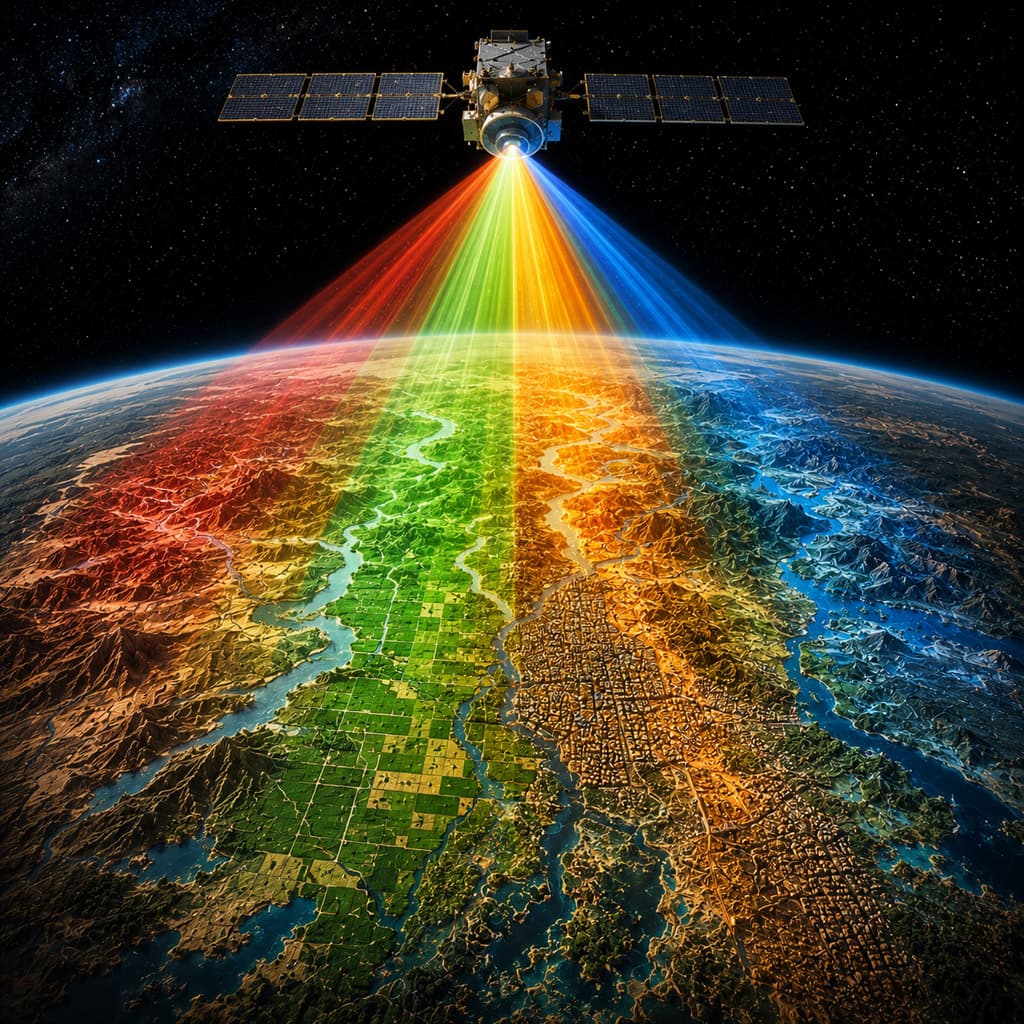
A normal RGB camera records three broad bands: red, green, and blue. A multispectral camera may record five to ten bands, such as blue, green, red, red edge, and near-infrared. A hyperspectral sensor records dozens to hundreds of narrow, continuous bands across the visible, near-infrared, and sometimes shortwave infrared regions.
For rice, that spectral detail is powerful. Chlorophyll affects reflectance in the visible and red-edge region. Leaf structure influences near-infrared reflectance. Water content changes absorption in shortwave infrared wavelengths. Disease, nutrient deficiency, and toxicity alter pigment, canopy structure, moisture, and biochemical properties. Hyperspectral imaging captures these changes as curves rather than simple colours.
This is especially useful before symptoms become obvious. A nitrogen-deficient rice canopy may still look green in RGB imagery, but its red-edge position and chlorophyll-sensitive indices may already shift. A water-stressed patch may not yet wilt, but its near-infrared and shortwave infrared response can change. Hyperspectral imaging has been widely used to estimate crop water content, leaf nitrogen, chlorophyll, biomass, and leaf area index in precision agriculture studies. (ARCC Journals)
Key Spectral Indices for Crop Health
Vegetation indices compress spectral information into interpretable indicators. They are not magic numbers; they must be calibrated with field measurements such as SPAD chlorophyll readings, leaf nitrogen samples, soil moisture, disease scoring, and yield plots. But they provide an excellent bridge between raw spectra and agronomic decisions.
| Index | Formula | What it measures | Healthy range | |
|---|---|---|---|---|
| —– | ——————————— | ——————————————————- | ———————————————————— | |
| NDVI | (R₈₀₀ - R₆₇₀) / (R₈₀₀ + R₆₇₀) | General greenness, canopy vigour, biomass | ~0.65–0.90 for dense healthy rice | |
| NDRE | (R₇₉₀ - R₇₂₀) / (R₇₉₀ + R₇₂₀) | Chlorophyll and nitrogen status in denser canopy | ~0.25–0.55 depending on growth stage | |
| CIre | (R₇₅₀/R₇₁₀) - 1 | Red-edge chlorophyll concentration | Higher values generally indicate stronger chlorophyll | |
| NDWI | (R₈₅₀ - R₁₂₄₀) / (R₈₅₀ + R₁₂₄₀) | Vegetation water content | Positive values usually indicate higher canopy water content | |
| PRI | (R₅₃₁ - R₅₇₀) / (R₅₃₁ + R₅₇₀) | Photosynthetic light-use efficiency and stress response | Relative; compare within same crop stage |
The Red Edge Chlorophyll Index is especially useful:
CIre = (R₇₅₀/R₇₁₀) - 1
The red edge region, roughly 700–740 nm, is the sharp transition between strong red absorption by chlorophyll and high near-infrared reflectance from leaf structure. When chlorophyll concentration changes, this transition shifts and changes shape. That is why red-edge bands are sensitive to nitrogen and chlorophyll status, particularly in dense crops like rice where traditional NDVI can saturate.
For vegetation water content, the NDWI formula is:
NDWI = (R₈₅₀ - R₁₂₄₀) / (R₈₅₀ + R₁₂₄₀)
Near-infrared reflectance around 850 nm is influenced by leaf structure, while reflectance around 1240 nm is sensitive to water absorption. When canopy water content drops, the relationship between these bands changes, making NDWI useful for detecting water stress.
import numpy as np
import rasterio

with rasterio.open("barind_hyperspectral.tif") as src:
    bands = src.read()  # shape: (n_bands, rows, cols)

# Band indices (0-based) for a 270-band sensor
R710 = bands[35]   # ~710nm
R750 = bands[45]   # ~750nm
R850 = bands[75]   # ~850nm
R1240 = bands[185] # ~1240nm

CIre = (R750 / (R710 + 1e-9)) - 1
NDWI = (R850 - R1240) / (R850 + R1240 + 1e-9)

print(f"Mean CIre: {CIre.mean():.3f}  |  Mean NDWI: {NDWI.mean():.3f}")
Field Results from the 2024 Boro Season
During a hypothetical 2024 Boro-season monitoring campaign in the Barind zone, drone flights would be most valuable at three stages: active tillering, panicle initiation, and grain filling. At each stage, hyperspectral maps could be compared with field measurements from sample plots.
The strongest early signal would likely come from chlorophyll-sensitive indices. Low CIre and NDRE patches would indicate possible nitrogen deficiency, poor root activity, or uneven fertilizer distribution. In some fields, these patches might follow irrigation channels or slightly elevated micro-topography, suggesting that water availability and nutrient uptake are linked.
NDWI would reveal another layer: water stress. In Barind’s dry-season rice, a field can look uniformly green while some areas are already losing canopy water content. Those zones may correspond to sandy lenses, compacted soil, weak irrigation reach, or pump scheduling gaps.
Hyperspectral imaging can also support disease scouting. Rice blast, one of the most damaging fungal diseases of rice, affects leaf pigments and canopy structure. Recent research has explored hyperspectral indices specifically for rice blast monitoring, showing the potential of narrow-band spectral information for disease detection. (MDPI)
The four major crop stresses identifiable from hyperspectral imaging include:
- Nitrogen deficiency
- Water stress
- Blast fungal disease
- Heavy metal toxicity
“For Barind farmers, the important change is not just seeing a stressed field. It is knowing whether the stress is water, nitrogen, disease, or soil toxicity — because each one needs a different recommendation.” — BARC agronomist
Path to Adoption
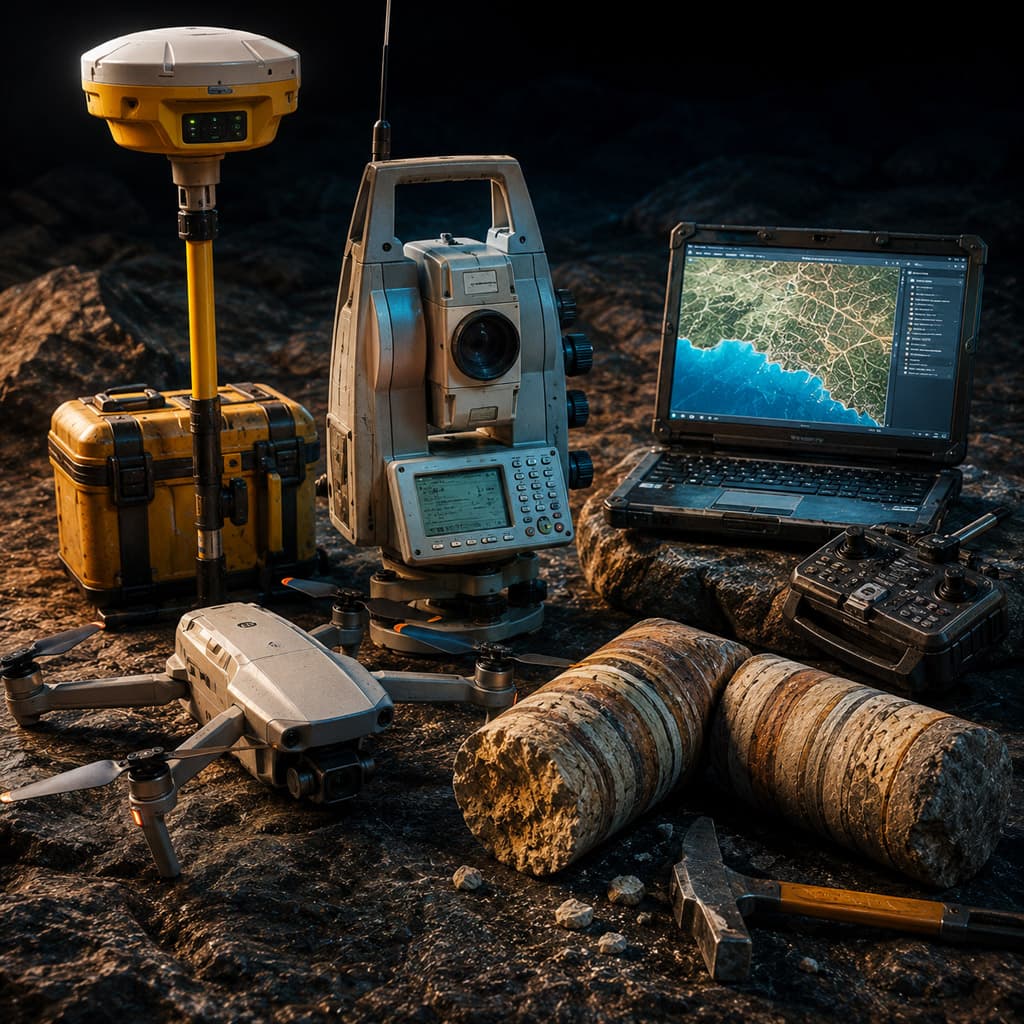
The path to adoption is not simply buying sensors. Hyperspectral agriculture needs a full workflow: calibrated sensors, reflectance panels, GPS control, cloud-free flight timing, field sampling, agronomic interpretation, and farmer-friendly advisory products. A beautiful spectral cube is useless if it does not become a decision: irrigate this block, reduce nitrogen there, scout this disease hotspot, test soil in that corner.
For Bangladesh, a practical model would be service-based. Agricultural extension teams, research institutes, universities, and private agri-tech providers could run seasonal drone campaigns over high-value or water-stressed zones. The output should not be a complex spectral report for farmers. It should be a simple map: green for healthy, yellow for watch, red for action — with recommendations linked to local crop stage and soil-water conditions.
Hyperspectral imaging will not solve Barind’s groundwater crisis by itself. But it can make rice cultivation more intelligent. It can reduce waste, protect yield, and help farmers respond before stress becomes visible damage. In a region where food security and water security are now tightly connected, seeing the invisible may become one of the most practical tools agriculture has.
Sources / References
- Islam and Kanungoe, “Groundwater Depletion with Expansion of Irrigation in Barind Tract: A Case Study of Tanore Upazila,” 2012. (SCIRP)
- Dey et al., “Sustainability of groundwater use for irrigation of dry-season crops in northwest Bangladesh,” Groundwater for Sustainable Development, 2017. (ScienceDirect)
- Agricultural Research Communication Centre, review discussion on hyperspectral imaging for crop water content, nitrogen, chlorophyll, biomass and LAI monitoring. (ARCC Journals)
- Zheng et al., “New Hyperspectral Geometry Ratio Index for Monitoring Rice Blast,” Remote Sensing, 2024. (MDPI)
- Yuhao et al., “Rice Chlorophyll Content Monitoring using Vegetation Indices and Red Edge Band,” Pertanika Journal of Science & Technology, 2020. (pertanika.upm.edu.my)










Responses (0 )