


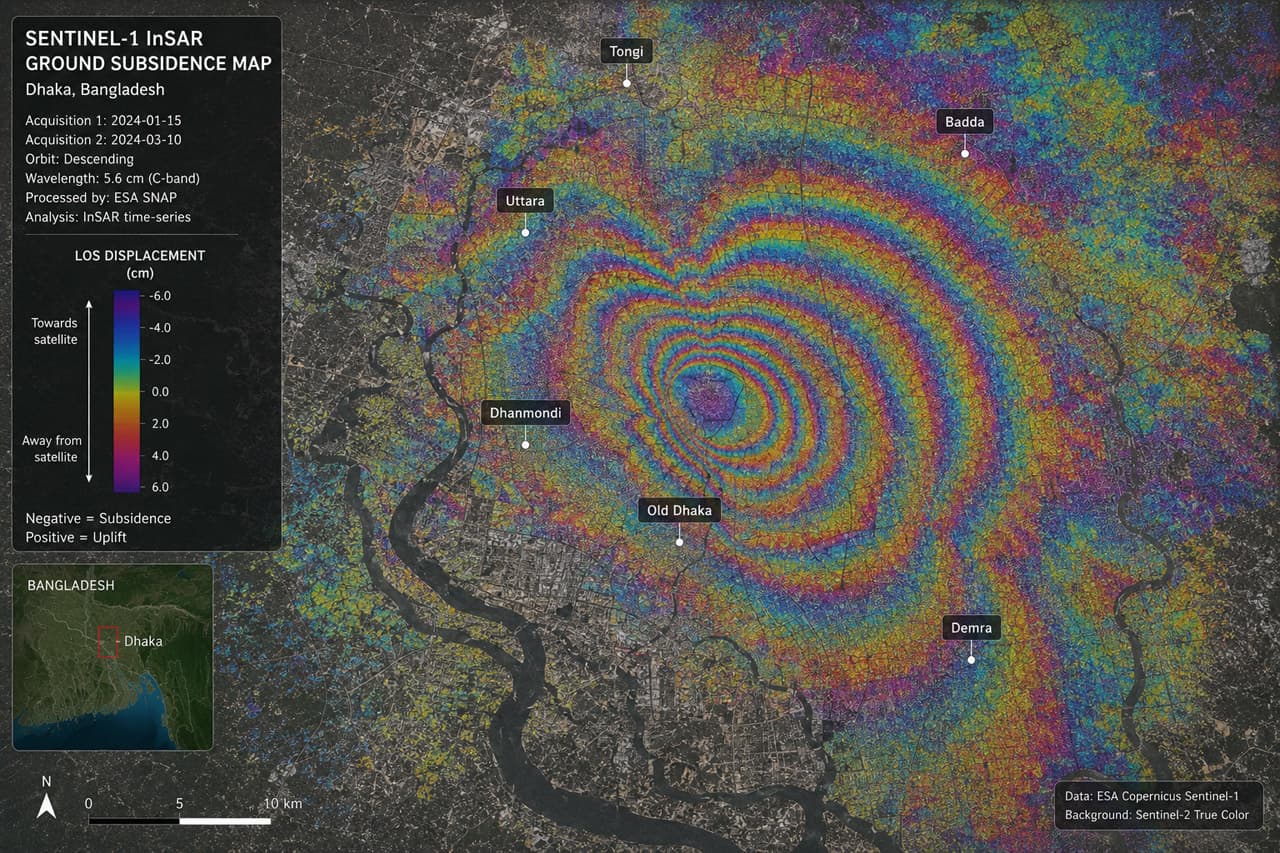
Hero image caption: Satellite interferogram visualization showing coloured phase fringes over an urban landscape, where each colour cycle represents subtle ground movement along the radar line of sight.
With a satellite radar beam, scientists can detect that the ground beneath a city moved 3.2 millimetres — from 700 kilometres above the Earth.
That sounds almost impossible. A city street shifts by less than the thickness of a coin, and an orbiting spacecraft notices. Yet this is exactly the power of Synthetic Aperture Radar Interferometry, or InSAR. For geospatial professionals, InSAR is one of the most elegant technologies in Earth observation: it turns repeated radar images into deformation maps, allowing us to monitor land subsidence, earthquakes, volcanoes, landslides, mining areas, dams, bridges, and urban infrastructure.
Unlike optical satellites, radar does not need sunlight. It can image the ground at night and through clouds. This makes SAR especially valuable in humid, monsoon-affected regions like Bangladesh, where cloud-free optical imagery is often limited. For a megacity such as Dhaka, where groundwater extraction, soft deltaic sediments, construction loading, and drainage stress all interact, InSAR provides a city-scale view of slow ground movement that would be extremely difficult to capture using field instruments alone.
How SAR Interferometry Works
A SAR satellite sends microwave pulses toward Earth and records the returning signal. Each radar image contains two important pieces of information: amplitude and phase. Amplitude tells us how strongly the surface reflected the radar signal. Phase tells us where the radar wave was in its cycle when it returned to the satellite.
InSAR compares the phase of two SAR images acquired from nearly the same orbit at different times. If the ground surface has moved between the two acquisitions, the radar path length changes slightly. That tiny change appears as a phase difference. When processed correctly, the phase difference can be converted into displacement along the satellite’s line of sight.
The European Space Agency’s Sentinel-1 mission is one of the most widely used sources for InSAR because it provides C-band radar imagery, systematic coverage, and open access. ESA describes Sentinel-1 as an all-weather, day-and-night radar mission, with a sun-synchronous orbit at about 693 km altitude and a six-day revisit at the equator for a two-satellite constellation. (<a href="https://www.esa.int/Applications/ObservingtheEarth/Copernicus/Sentinel-1/Factsandfigures?utm_source=chatgpt.com”>European Space Agency)
| Satellite | Agency | Wavelength | Revisit time | Free access | |
|---|---|---|---|---|---|
| —————————— | ——————— | —————– | ————————————————- | ——————————— | |
| Sentinel-1 | ESA / Copernicus | C-band, ~5.6 cm | 6–12 days depending on constellation and coverage | Yes | |
| ALOS-2 PALSAR-2 | JAXA | L-band, ~23.8 cm | ~14 days | Partly/open for selected products | |
| NISAR | NASA / ISRO | L-band and S-band | 12 days planned | Yes, open science data | |
| RADARSAT Constellation Mission | Canadian Space Agency | C-band, ~5.6 cm | ~4 days constellation-level | Limited / policy-based | |
| TerraSAR-X / TanDEM-X | DLR / Airbus | X-band, ~3.1 cm | 11 days | Commercial / research access |
ALOS-2’s PALSAR-2 sensor is useful where vegetation and temporal decorrelation are challenging because longer L-band wavelengths can preserve coherence better over some natural surfaces. JAXA has opened selected ALOS-2/PALSAR-2 ScanSAR products to the public, while NASA Earthdata also hosts open-access ALOS-2 ScanSAR collections. (<a href="https://www.eorc.jaxa.jp/ALOS/en/dataset/alosopenandfreee.htm?utmsource=chatgpt.com”>JAXA EORC) NISAR, the NASA–ISRO SAR mission, is designed to provide global land and ice observations every 12 days, and its mission documentation states that data access will be free and open. (<a href="https://www.isro.gov.in/MissionGSLVF16NISARHome.html?utm_source=chatgpt.com”>ISRO)
The Physics of Phase Difference
The core InSAR relationship is beautifully compact:
Δφ = (4π/λ) × Δr
Here, Δφ is the radar phase difference, λ is the radar wavelength, and Δr is the displacement along the radar line of sight.
In plain language: if the ground moves toward or away from the satellite, the radar wave has to travel a slightly different distance. Because the radar signal travels from the satellite to the ground and back again, the path change is doubled. That is why the equation includes 4π rather than 2π.
A shorter wavelength is more sensitive to small movement, but it can also lose coherence more easily over vegetation, water, or rapidly changing surfaces. A longer wavelength may be less sensitive per phase cycle but can perform better over vegetated or soft terrain. This is why C-band Sentinel-1 is excellent for broad operational monitoring, while L-band missions such as ALOS-2 and NISAR are particularly valuable for deformation studies in deltas, wetlands, and vegetated regions.
The visual output of this comparison is an interferogram. It often appears as colourful fringes. Each fringe cycle represents a repeating phase interval. After removing topographic effects, orbital errors, atmospheric noise, and phase ambiguities, those colours can become a deformation map.
Dhaka Is Sinking — What the Data Shows
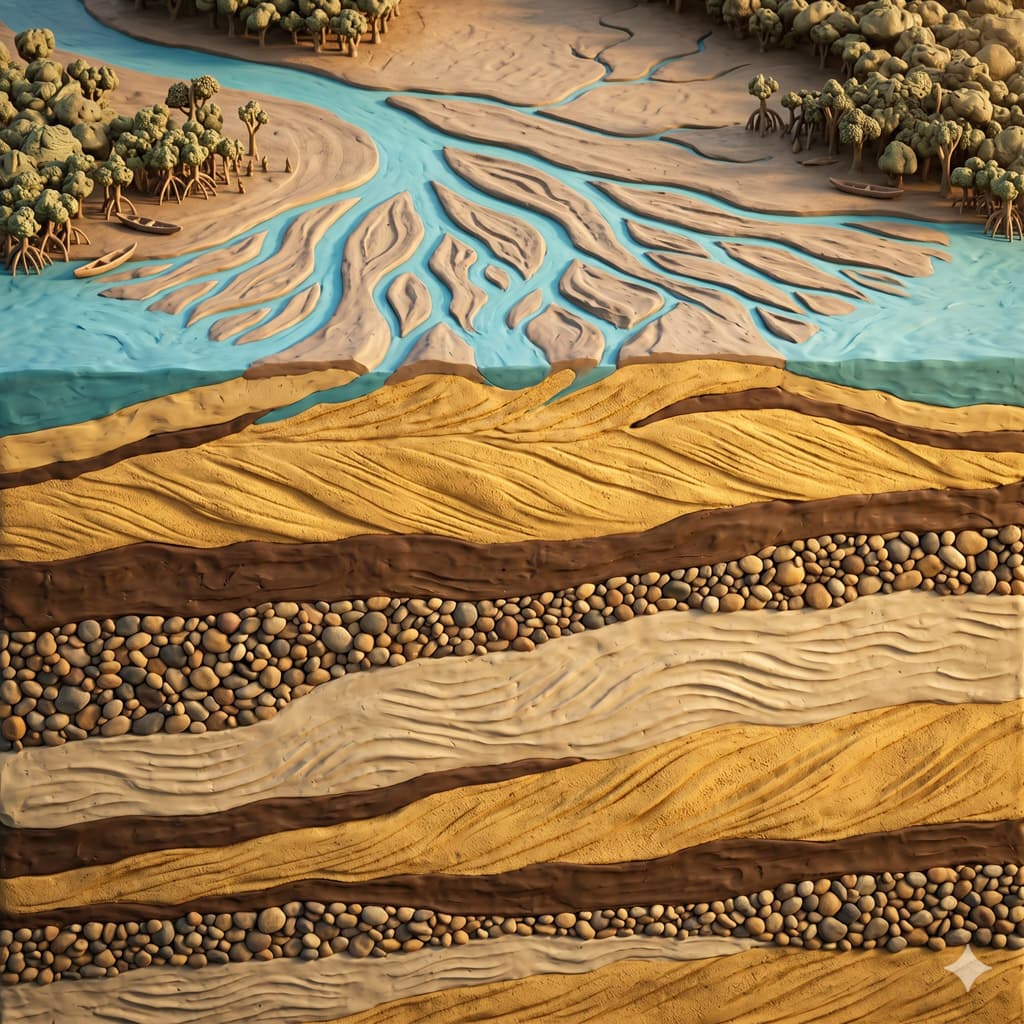
Dhaka sits on young alluvial and deltaic deposits within the broader Ganges-Brahmaputra-Meghna system. The city’s rapid growth has placed enormous pressure on groundwater, land, drainage, and infrastructure. InSAR studies have repeatedly indicated measurable subsidence in Dhaka and surrounding areas.
A 2024 remote sensing study discussing Bangladesh subsidence reported that InSAR monitoring in Dhaka and Khulna detected land subsidence rates of 0 to 10 mm/year in Dhaka, with higher rates reported in Khulna. (<a href="https://www.mdpi.com/2072-4292/16/19/3715?utmsource=chatgpt.com”>MDPI) A more recent geohazard-monitoring study using Sentinel-1 InSAR reported consistent subsidence in urban Dhaka at an average rate of about 16 mm/year, highlighting the city’s ongoing deformation risk. (<a href="https://onlinelibrary.wiley.com/doi/10.1002/gj.5206?utmsource=chatgpt.com”>Wiley Online Library)
The causes are not singular. Dhaka’s subsidence is a combined geotechnical, hydrological, and urban-planning problem. Four commonly discussed drivers are:
- Groundwater extraction
- Loose alluvial soil
- Construction loading
- Drainage and waterlogging stress
“A few millimetres per year may sound small, but over decades it changes foundation behaviour, drainage gradients, flood exposure, and the safety margin of urban infrastructure.” — BUET geotechnical engineer
For city planners, the key point is not only whether Dhaka is sinking. It is where, how fast, and which infrastructure corridors are exposed. A deformation map can reveal hotspots near industrial zones, reclaimed land, transport corridors, or areas of intensive groundwater use.
Processing the Interferogram
In practice, InSAR processing is a chain of careful corrections. A typical Sentinel-1 workflow includes orbit correction, co-registration, interferogram formation, debursting for TOPS mode, topographic phase removal using a DEM, filtering, phase unwrapping, terrain correction, and conversion to displacement.
The following simplified Python example shows the concept of generating an interferogram using SNAP’s snappy interface:
import snappy
from snappy import ProductIO, GPF

master = ProductIO.readProduct("S1A_IW_SLC_20240101.zip")
slave  = ProductIO.readProduct("S1A_IW_SLC_20240113.zip")

params = snappy.HashMap()
params.put("masterBand", "i_IW1_VV_mst")
params.put("slaveBand",  "i_IW1_VV_slv")

interferogram = GPF.createProduct("Interferogram", params, [master, slave])
ProductIO.writeProduct(interferogram, "interferogram_output", "BEAM-DIMAP")
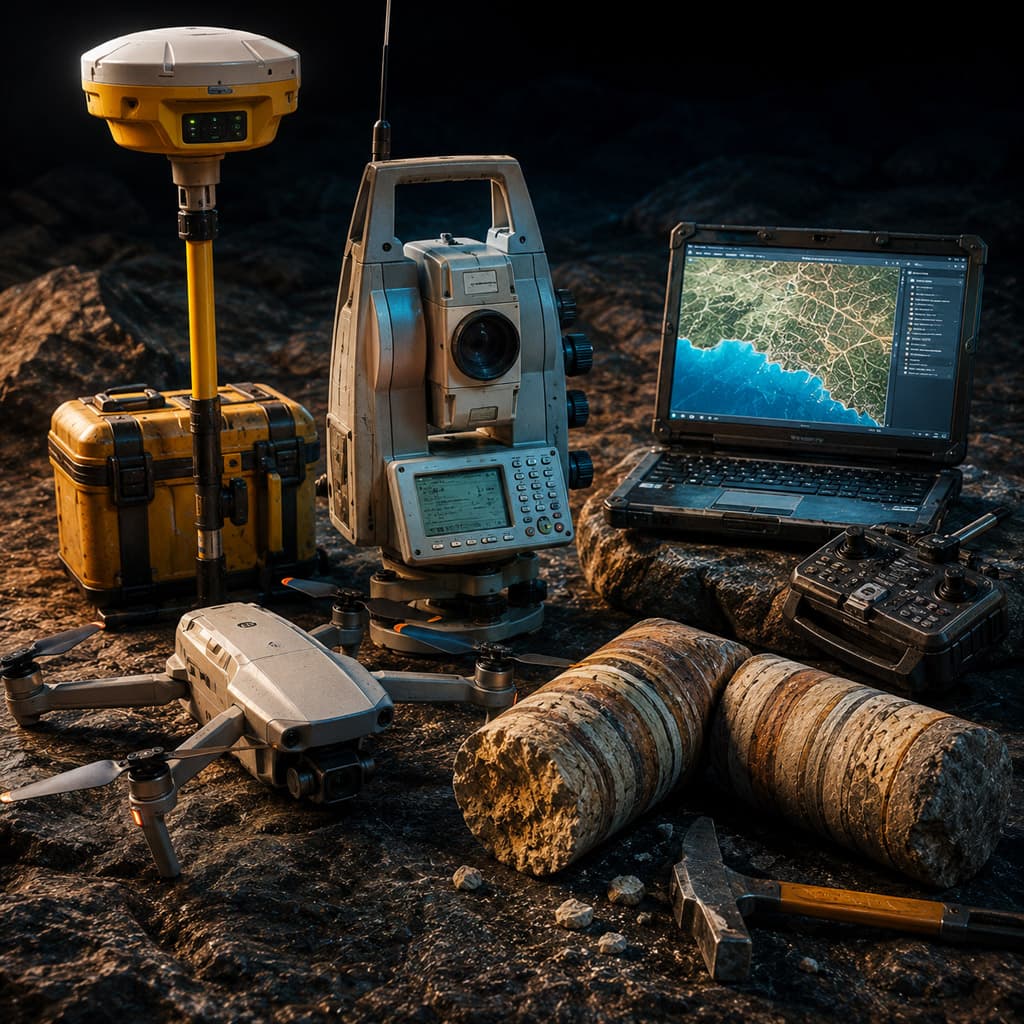
This code is intentionally minimal. A production-grade workflow would require precise orbit files, split and apply orbit operations, back-geocoding, enhanced spectral diversity, interferogram generation, TOPSAR deburst, Goldstein filtering, phase unwrapping with SNAPHU, terrain correction, and validation against GNSS or levelling data. ESA’s Sentinel-1 InSAR resources emphasize the use of Sentinel-1 time series for deformation mapping in areas affected by subsidence, landslides, glaciers, and other surface-motion processes. (sdg.esa.int)
For Dhaka, time-series methods such as Persistent Scatterer InSAR or Small Baseline Subset analysis are usually more reliable than a single interferogram. Urban surfaces provide many stable radar reflectors — rooftops, bridges, roads, and concrete structures — which can act as persistent measurement points across many satellite passes.
Applications Beyond Subsidence
Subsidence monitoring is only one part of the InSAR story. The same physics can detect earthquake displacement, volcanic inflation, landslide creep, glacier motion, mining deformation, reservoir-induced ground movement, and infrastructure instability. For a geo-tech audience, this makes InSAR more than a remote sensing method; it is a monitoring layer for risk intelligence.
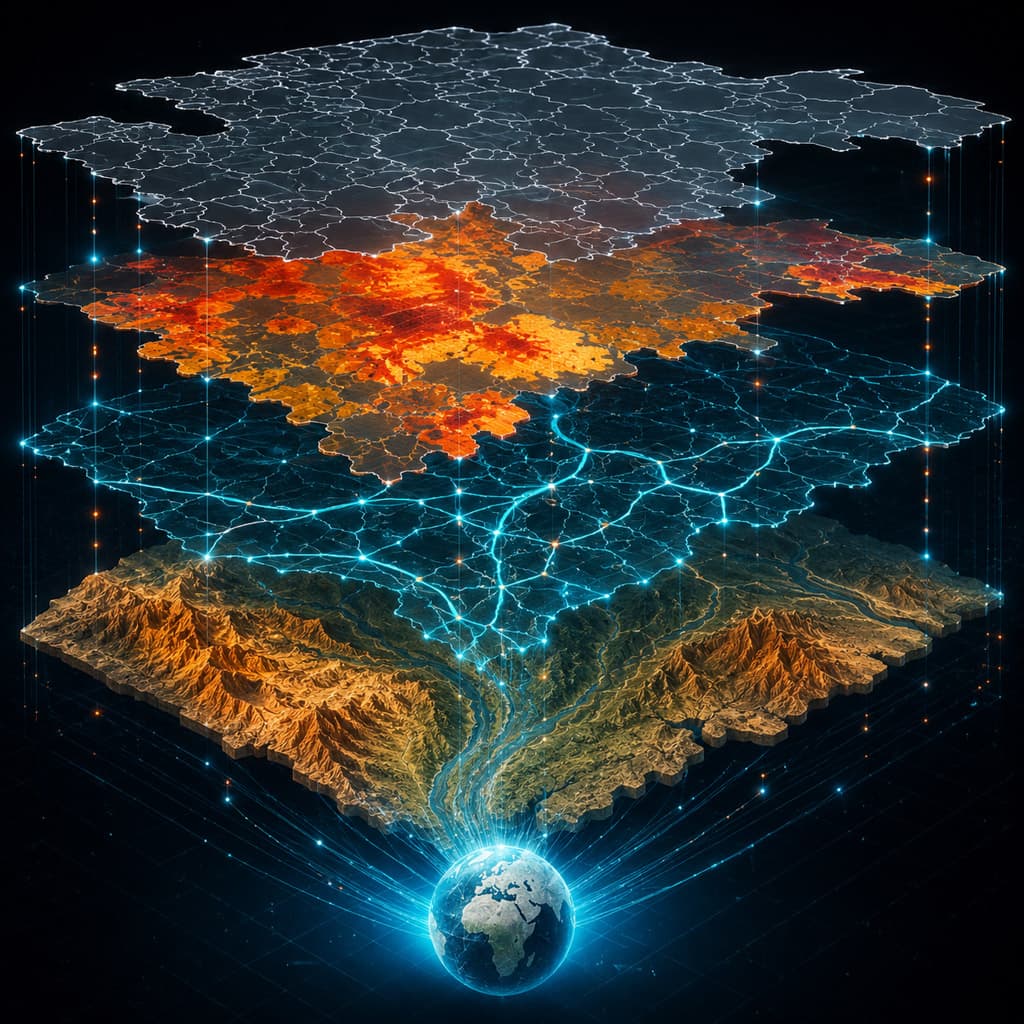
In Bangladesh, the opportunity is significant. InSAR can support urban planning in Dhaka, embankment monitoring in coastal polders, bridge and rail corridor risk screening, industrial-zone stability assessment, and groundwater-management policy. Combined with PostGIS, building footprints, borehole logs, groundwater wells, road networks, and flood models, InSAR becomes a spatial decision-support system.
The wow factor remains: millimetres from orbit. But the real value is practical. If a satellite can show that one part of a city is sinking faster than another, engineers can inspect foundations, water managers can review extraction zones, and planners can avoid adding load where the ground is already losing elevation.
InSAR does not replace field surveys. It tells us where to look, how fast things are changing, and whether the problem is local, corridor-wide, or city-scale. For a sinking megacity, that perspective is not just impressive science. It is an early warning system written in radar phase.
Sources / References
- European Space Agency — Sentinel-1 facts and figures; Sentinel-1 mission overview. (<a href="https://www.esa.int/Applications/ObservingtheEarth/Copernicus/Sentinel-1/Factsandfigures?utm_source=chatgpt.com”>European Space Agency)
- ESA Sentinel-1 InSAR project resources — applications for surface deformation, landslides, glaciers, and subsidence. (sdg.esa.int)
- NASA Earthdata — Sentinel-1 platform information and SAR data characteristics. (NASA Earthdata)
- JAXA / EORC — ALOS series open and free data; ALOS-2 PALSAR-2 information. (<a href="https://www.eorc.jaxa.jp/ALOS/en/dataset/alosopenandfreee.htm?utm_source=chatgpt.com”>JAXA EORC)
- NASA Earthdata / ASF — ALOS-2 PALSAR-2 ScanSAR data access. (NASA Open Data Portal)
- ISRO — NISAR mission overview and 12-day global observation plan. (<a href="https://www.isro.gov.in/MissionGSLVF16NISARHome.html?utmsource=chatgpt.com”>ISRO)
- NASA / ASF NISAR documentation — free and open NISAR data access. (NISAR Docs)
- Ouyang et al. 2024, Remote Sensing — groundwater and land subsidence in Bangladesh using GRACE and InSAR. (MDPI)
- Geological Journal 2025 — Sentinel-1 InSAR geohazard monitoring and reported urban Dhaka subsidence rate. (Wiley Online Library)











Responses (0 )