


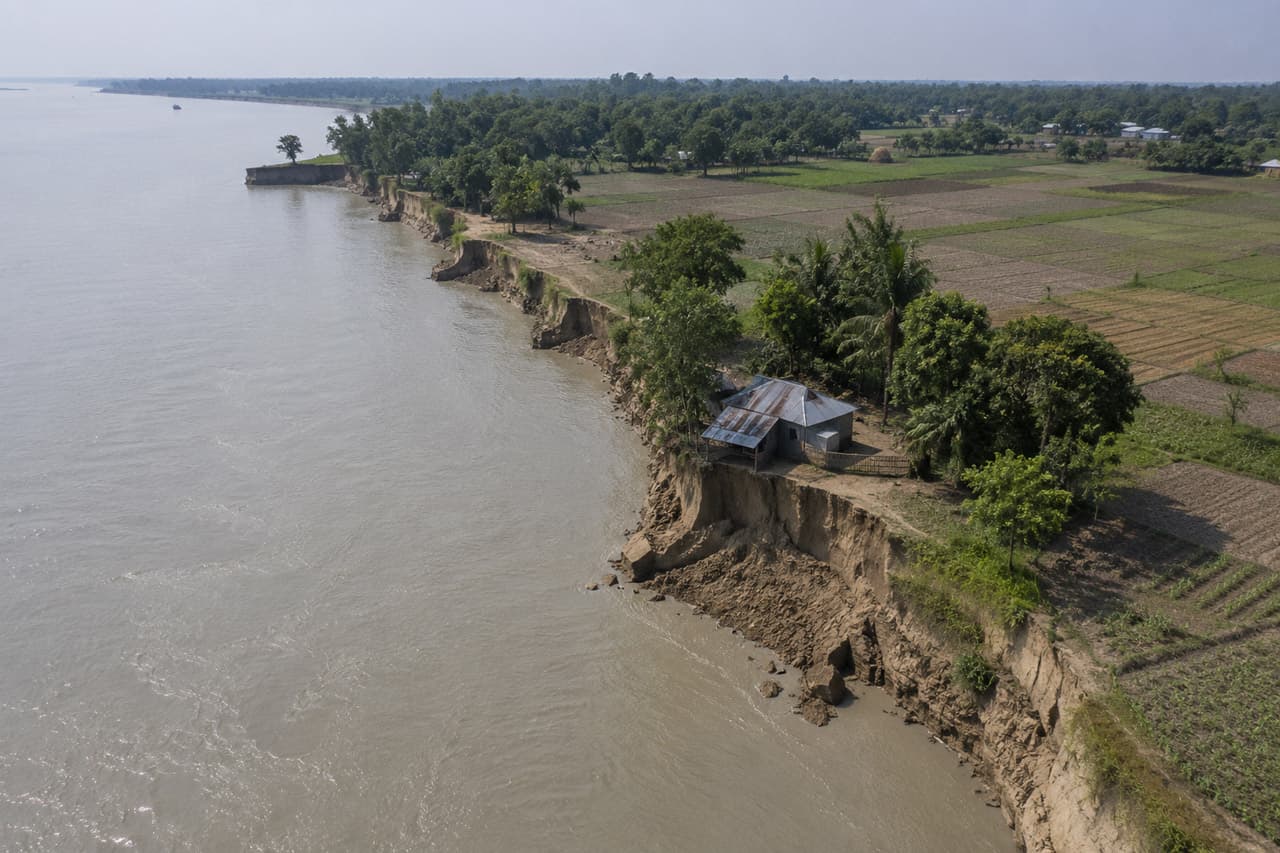
Hero image caption: Aerial drone view of an eroding Padma River bank: a vertical cut face collapsing into brown monsoon water, homestead trees leaning over the edge, tin-roof houses being dismantled, and fresh cracks running through the soil behind the shoreline.
The Padma doesn’t ask permission. It takes 5–10 metres of bank every day in peak monsoon, and the homestead that was there yesterday is silt today.
Along the river, erosion is not a future hazard. It is happening while the map is being drawn. A family removes the tin sheets from its roof. A neighbour digs out a tube-well pipe. Someone cuts down a mango tree before the river takes it. Children watch the edge of the courtyard crack. By evening, the GPS point where the house stood may already be water.
This is where UAV surveying becomes more than a mapping exercise. A drone flying 80 metres above the Padma can document a shoreline that may not exist next week. It can produce orthophotos, digital surface models, bank-height estimates, crack maps, and evidence layers for compensation, engineering design, and relocation planning. In a country where riverbank erosion displaces families repeatedly, the camera in the sky becomes a witness.
Bangladesh’s Most Erosion-Prone River
The Padma is one of Bangladesh’s great dynamic rivers, carrying the combined force of upstream flow, sediment, monsoon discharge, and channel migration. Its banks are often made of unconsolidated alluvial material — sand, silt, clay lenses, and recently deposited floodplain sediments. During peak flow, the river undercuts the bank toe. Cracks appear behind the edge. Then whole blocks collapse.
Bangladesh’s wider riverbank erosion problem is severe. Planning literature and disaster reports commonly cite thousands of hectares of land lost annually and hundreds of thousands of people affected or displaced. A Bangladesh Institute of Planners case study notes that riverbanks in Bangladesh can move from 60 to 1,600 metres annually due to erosion and accretion, and cites estimates of around 10,000 hectares of land eroded each year, with major human impacts. (Bip)
The Padma’s erosion is especially visible in districts such as Shariatpur, Faridpur, Rajbari, Manikganj, Munshiganj, and parts of Madaripur. In Shariatpur’s Naria Upazila, severe erosion in 2018 affected at least ten points along a seven-kilometre stretch of the Padma bank, including Naria Pourashava, Kedarpur, Moktarer Char, Nawa Para, Charatra, and Gharisara. ACAPS reported that more than 8,000 families were living on roads and public land after displacement linked to the crisis. (ReliefWeb)
Flying the Erosion Front
A UAV survey begins before take-off. The team walks the safe part of the bank, marking cracks, recent collapse scars, homestead locations, trees, shops, mosques, schools, and embankment segments. Local residents point to yesterday’s shoreline, last week’s shoreline, and the place where the market used to be. These oral maps matter because the river removes evidence faster than formal surveys can arrive.
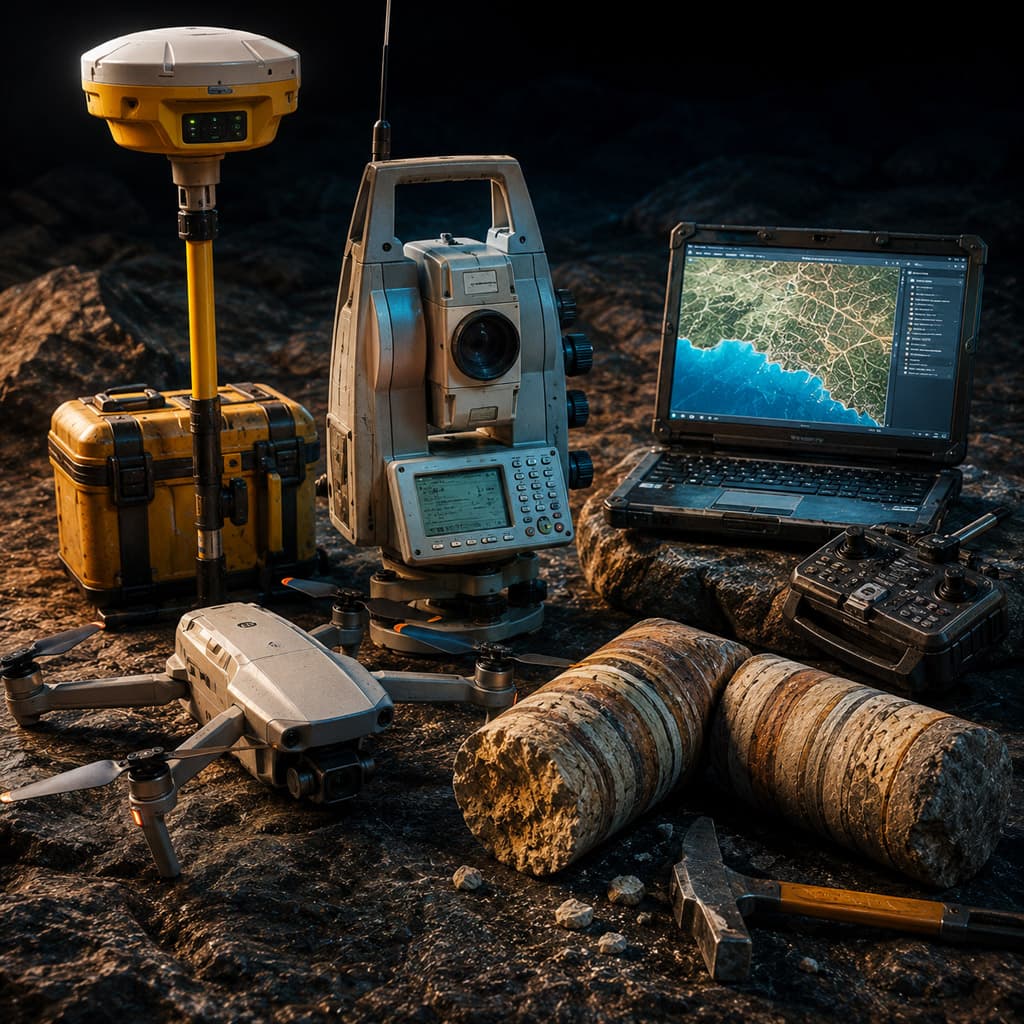
The drone flight plan usually combines two image types. Nadir images, taken straight down, are used to create an orthomosaic and shoreline map. Oblique images, taken at an angle, capture the vertical bank face and help estimate bank height. Ground control points or RTK/PPK positioning improve accuracy. Repeated flights — weekly during active erosion, monthly during lower flow — can turn a one-time survey into a change-detection system.
The key product is not just a beautiful aerial photograph. It is a measurable surface. Photogrammetry reconstructs overlapping images into a dense point cloud and digital surface model. From that, analysts can extract the bank edge, measure retreat distance, estimate eroded area, and approximate erosion volume.
The erosion volume calculation can be expressed as:
Verosion = Σ(Abaseline - Acurrent) × Hbank
Here, Abaseline and Acurrent represent cross-sectional or mapped land-area differences between two survey dates, and Hbank is the bank height. The important UAV contribution is that Hbank can be derived photogrammetrically from the 3D model, instead of being guessed from field observation alone.
What the UAV Data Shows
Drone data usually reveals erosion as a process, not a line. The active front includes the visible river edge, tension cracks behind the edge, slump blocks, undercut zones, wet scarps, fallen vegetation, and abandoned house platforms. A shoreline digitized from satellite imagery may show where water meets land. A UAV model can show which land is already structurally failing.
| District | Annual erosion rate m/yr | Area lost 2010–2024 km² | Households displaced | Compensation status | |
|---|---|---|---|---|---|
| ———- | ———————— | ———————– | ——————– | ———————————————————– | |
| Shariatpur | 80–250 | 12–25 | 8,000–15,000 | Partial emergency support; formal compensation inconsistent | |
| Faridpur | 50–180 | 8–18 | 4,000–9,000 | Relief-based, often after displacement | |
| Rajbari | 40–150 | 6–14 | 3,000–7,000 | Limited; varies by project and land records | |
| Manikganj | 30–120 | 4–10 | 2,000–5,000 | Local support and project-linked protection | |
| Munshiganj | 20–100 | 3–8 | 1,500–4,000 | Case-specific; documentation gaps common |
These figures are indicative planning ranges compiled for communication, not official cadastral totals. Actual erosion varies by reach, season, discharge, protection works, and channel position. In Naria, one study summarized bankline analysis from 1980–2019 and reported major downstream-side erosion, including severe shifts in several intervals, with more than 5,000 people made homeless in 2018. (<a href="https://www.academia.edu/80965991/ImpactofRiverbankErosionACaseStudyofNariaUpazilaofShariatpurDistrictBangladesh?utmsource=chatgpt.com”>Academia)
A basic shoreline-change workflow in GeoPandas might look like this:
import geopandas as gpd

baseline = gpd.read_file("padma_shoreline_2014.shp")
current  = gpd.read_file("padma_shoreline_2024.shp")

# Project to BTM for area calculation
baseline = baseline.to_crs(epsg=32646)
current  = current.to_crs(epsg=32646)

# Eroded area = baseline land minus current land
eroded = gpd.overlay(baseline, current, how="difference")
print(f"Total eroded area: {eroded.geometry.area.sum() / 1e6:.2f} km²")
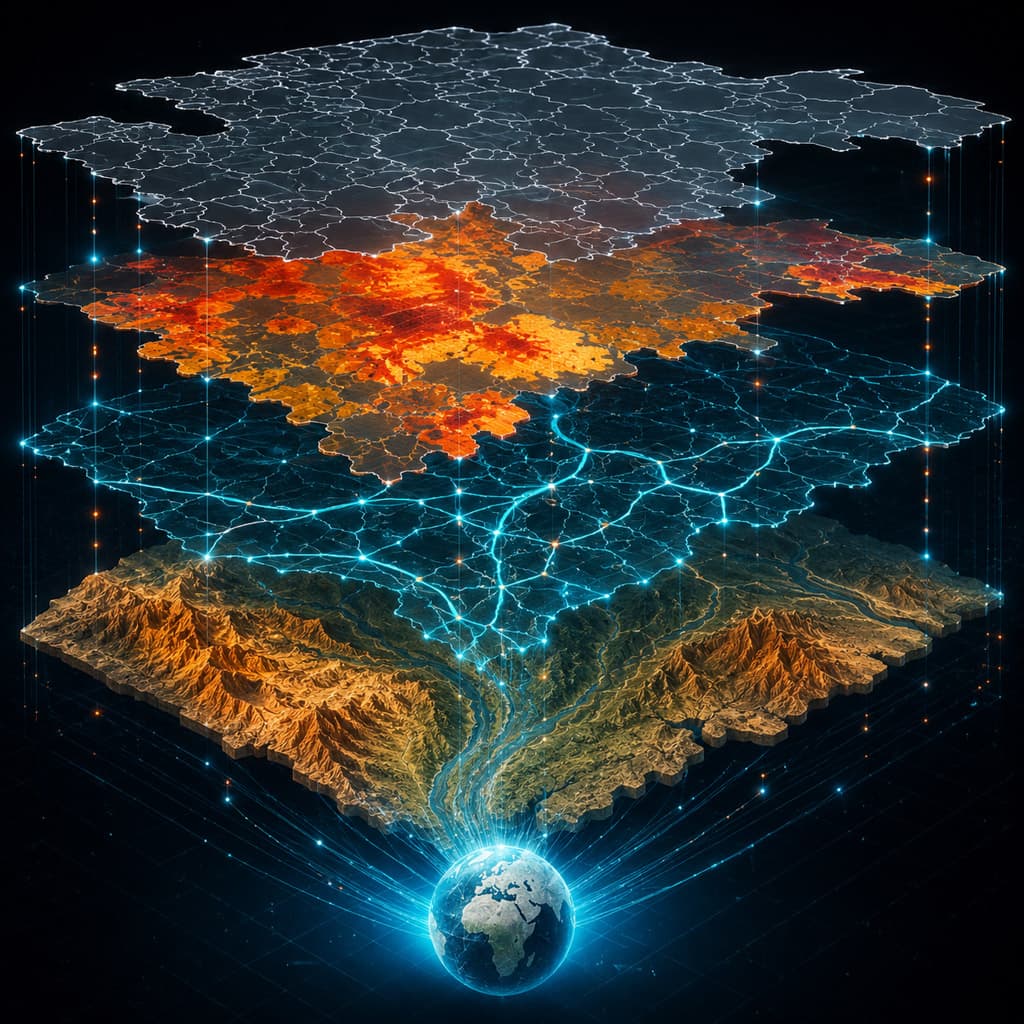
In production, the coordinate system should be selected carefully for Bangladesh-scale area calculations, and the baseline/current polygons must represent comparable land masks, not just line features. UAV orthomosaics, Sentinel-1 SAR water masks, Landsat/Sentinel-2 imagery, and field GPS points can be combined to improve confidence.
The Human Cost
Erosion is different from flood. Floodwater may enter and leave. Erosion removes the land itself. A family does not return to a wet house; it returns to no house, no courtyard, no pond, no trees, no graveyard, and sometimes no legal proof that the land existed.
“We took the roof sheets first, then the bed, then the Quran, then the cow. My father said leave the mango tree — there was no time. By morning the place where we cooked rice was inside the Padma.” — Family from Shariatpur
This is why documentation matters. Without a map, loss becomes anecdote. With UAV imagery, a disappearing settlement can be recorded before and after collapse. That record can support relief targeting, land-loss assessment, engineering prioritization, and historical memory.
But technology must be used carefully. Drone images of displaced households are sensitive. Survey teams should obtain local permission, avoid humiliating imagery, and share outputs with the community in usable form — printed maps, ward-level risk zones, and clear explanations of what the data means.
Can Science Help?
Science cannot stop the Padma everywhere. Some reaches can be protected; others may be too dynamic, too expensive, or too risky for hard engineering. The honest answer is a portfolio of measures:
- Jute geobag revetment
- Dredging
- Bank protection structures
- Managed retreat
Geobags and revetments can slow local erosion, especially near critical infrastructure. Dredging may help in selected hydraulic contexts but can fail if not tied to river morphology. Bank protection structures require design, maintenance, and long-term funding. Managed retreat is emotionally and politically difficult, but in some reaches it may be safer than pretending the river can be fixed in place.
UAV data helps decide which approach fits where. If a school is 40 metres from an active crack line, emergency relocation may be more realistic than protection. If a market serves thousands and the bank geometry is still defendable, rapid geobag placement may buy time. If a settlement has moved three times in ten years, planning must include land, livelihood, and legal support — not only sandbags.
The Padma will continue to move. But people should not have to face that movement blind. A drone survey cannot replace justice, compensation, or river engineering. It can, however, make the loss visible, measurable, and harder to ignore. In a landscape where yesterday’s homestead becomes today’s silt, that visibility is a form of protection.
Sources / References
- ACAPS / ReliefWeb — Bangladesh: Riverbank Erosion Briefing Note, 17 September 2018.
- Bangladesh Red Crescent / IFRC via ReliefWeb — Bangladesh: Displacement due to embankment collapse, Emergency Plan of Action Final Report, 2019.
- Zaman, A. B. — Riverbank erosion and landcover change: A case study at Naria Upazila of Shariatpur District, Journal of Bangladesh Institute of Planners, 2022.
- CAN South Asia — River-Erosion and Migration Nexus: Naria, Bangladesh, 2021.
- Ghosh and Mahbub — Riverbank erosion induced migration: a case study of Charbhadrasan Upazila, Faridpur, 2016.
- Billah, M. — Riverbank Erosion and Rural Food Security in Bangladesh, 2023.









Responses (0 )