

Bangladesh’s energy story has always been closely tied to natural gas. Gas fuels power plants, industries, fertilizer factories, households, and much of the country’s urban economy. But domestic production has struggled to keep pace with demand, while imported LNG exposes the country to global price swings and supply disruptions. In 2026, for example, Bangladesh planned to import multiple LNG cargoes during peak summer demand, including spot-market cargoes at sharply higher prices — a reminder that energy security is not only about fuel availability, but also affordability. (Reuters)
That is why the Chittagong Fold Belt remains one of Bangladesh’s most important subsurface frontiers. It is not a simple promise of easy gas, nor a reason to ignore the global transition away from fossil fuels. It is a geological question with policy consequences: how much domestic gas might still be found, how safely can it be developed, and how should it fit into a future energy mix that also needs renewables, efficiency, storage, and grid modernization?
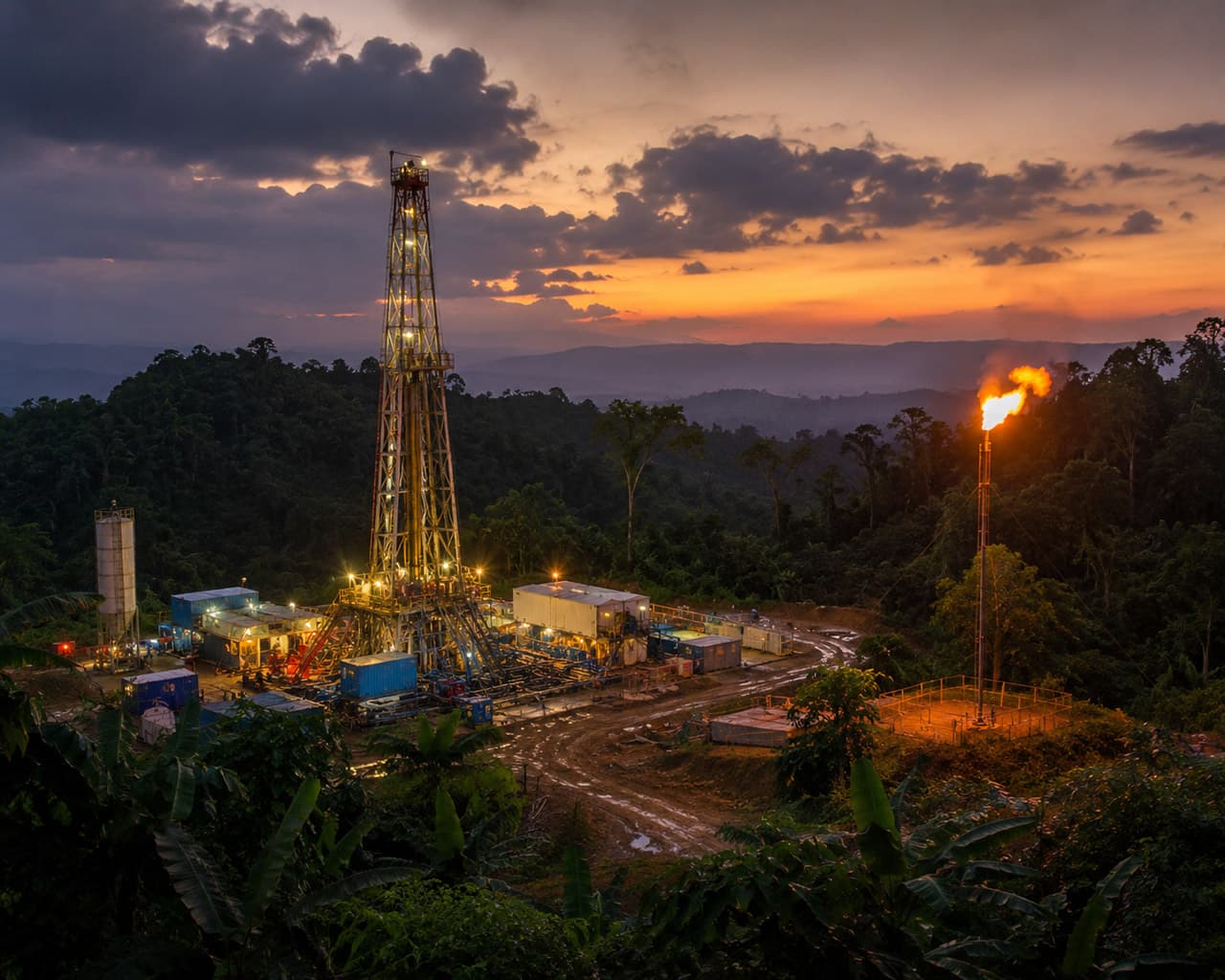
Photo caption: A drilling rig in the Chittagong Fold Belt, where geologists and engineers test folded sedimentary rocks for hidden gas-bearing reservoirs.
The Fold Belt Geology
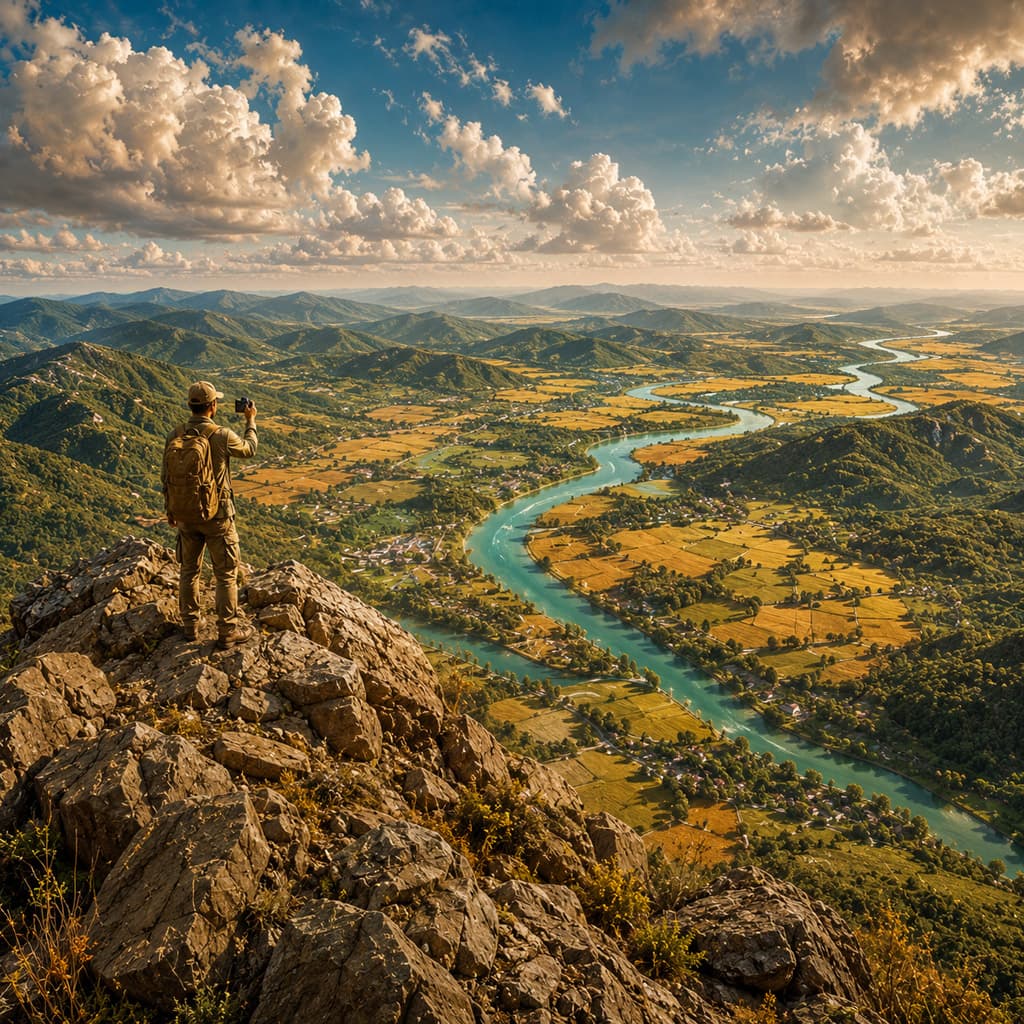
The Chittagong Fold Belt lies in southeastern Bangladesh, extending through the Chattogram Hill Tracts and connecting geologically with the Indo-Burman ranges. At the surface, it is a landscape of long, narrow hills and valleys. Beneath the surface, those hills are the expression of compressed sedimentary layers — sandstones, shales, siltstones, and mudstones folded by tectonic forces.
This fold belt formed along the eastern margin of the Bengal Basin, where thick sediments from the Himalaya and surrounding highlands were squeezed by oblique convergence between the Indian Plate and the Burma/Sunda plate system. The result is a series of elongated anticlines and synclines, often faulted, steepened, and structurally complex. For petroleum geologists, that complexity is both attractive and risky. Folds can create traps; faults can seal reservoirs — or break them open.
Most of Bangladesh’s discovered gas fields are onshore and concentrated in the eastern part of the country, including the Surma Basin and fold-belt-related provinces. Banglapedia notes that, by 2000, Bangladesh had discovered 22 gas fields, with most located in the eastern onshore area. (<a href="https://en.banglapedia.org/index.php/Hydrocarbon?utmsource=chatgpt.com”>Banglapedia) Later summaries list more discoveries, but the broad pattern remains: eastern Bangladesh is the heart of the country’s gas geology. (<a href="https://en.wikipedia.org/wiki/ListofnaturalgasfieldsinBangladesh?utmsource=chatgpt.com”>Wikipedia)
How Traps Form
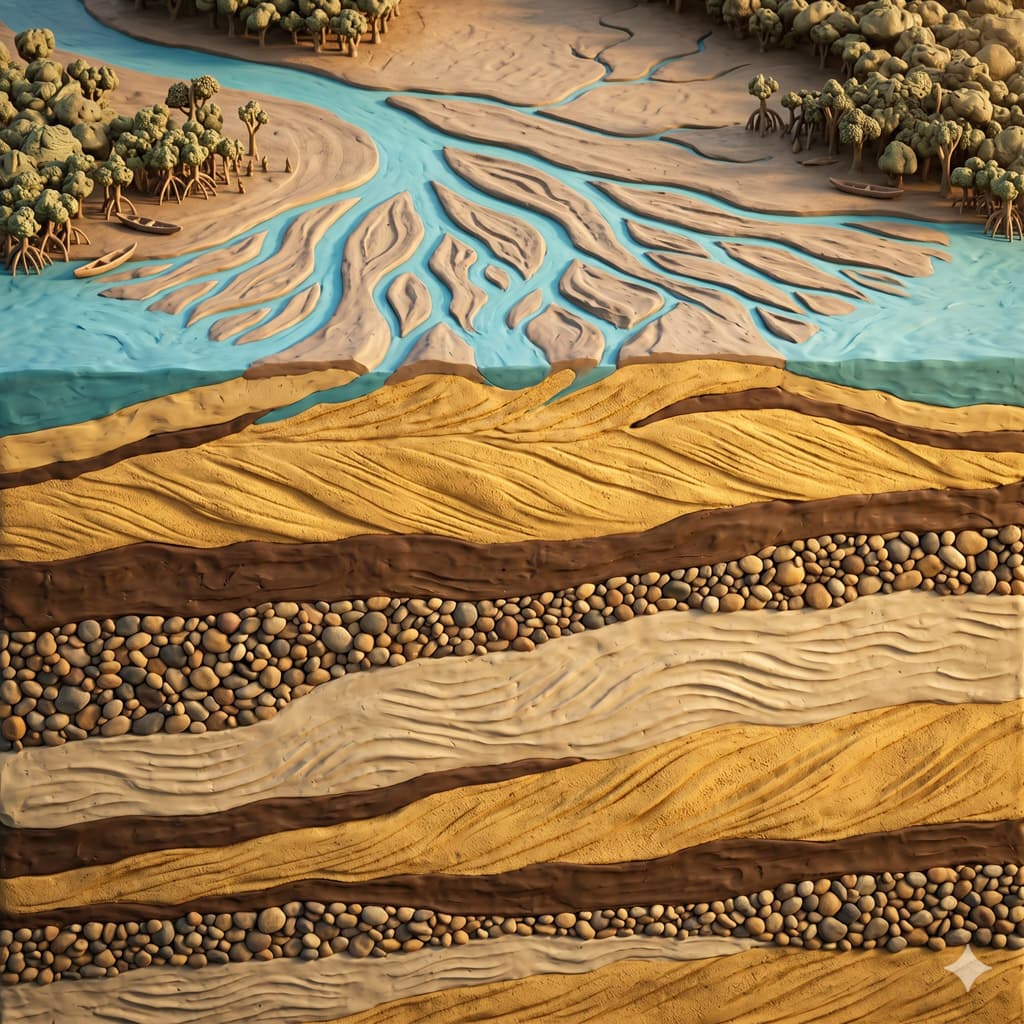
A gas field is not simply a place where gas exists underground. It requires a working petroleum system: organic-rich source rocks to generate hydrocarbons, heat and burial to mature them, migration pathways, porous reservoir rocks, impermeable seals, and a trap geometry that keeps gas from escaping.
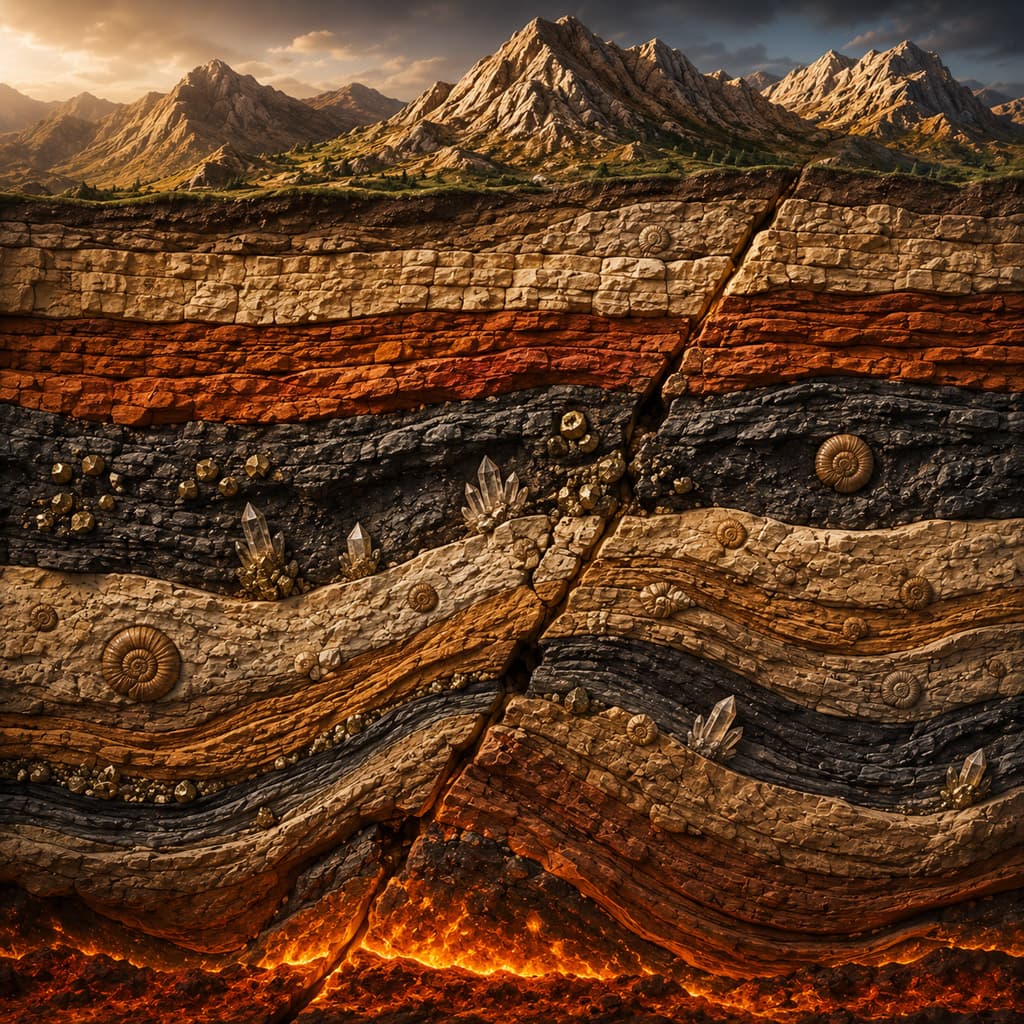
The classic fold-belt trap is an anticline. Imagine a stack of sedimentary layers bent upward like an arch. In a text diagram, it would look like this: lower layers curve upward into a dome-shaped crest; porous sandstone sits in the middle; shale lies above as a seal; gas migrates upward and accumulates at the highest part of the arch. Water stays lower, condensate may occur with the gas, and the best well targets the crest or structurally high flank.
Ideal gas reservoir conditions include: sufficient porosity to store gas, good permeability to allow flow, a reliable seal such as shale, adequate pressure, structural closure, and a mature source system. The gas itself is mostly methane, CH₄, with smaller amounts of ethane C₂H₆, propane C₃H₈, condensate, carbon dioxide, nitrogen, or other components depending on the field.
Three common trap types matter in Bangladesh’s fold belts:
- Anticline trap — gas accumulates at the crest of an upward-folded reservoir layer sealed by impermeable rock.
- Fault trap — movement along a fault places reservoir rock against sealing shale or creates a fault seal.
- Stratigraphic trap — gas is trapped by changes in rock type, such as a sandstone body pinching out into shale.
Drilling Into the Unknown
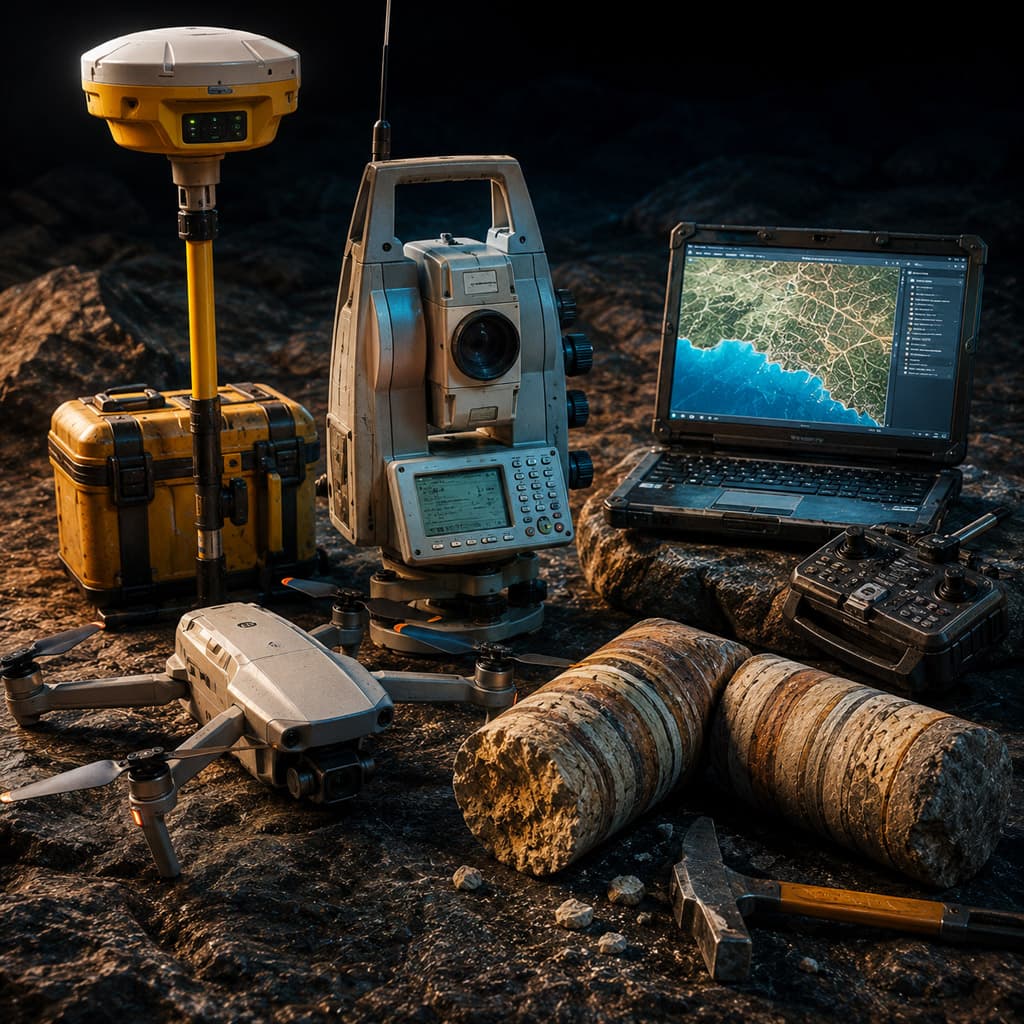
Exploration begins long before a drill bit turns. Geologists map surface structures, study satellite imagery, examine rock outcrops, and compare the fold belt with known producing areas. Geophysicists acquire seismic reflection data to image buried folds and faults. Gravity and magnetic surveys help constrain deeper basin architecture. Geochemists evaluate source-rock maturity and hydrocarbon signatures. Only after these pieces are assembled does a company select a drilling location.
Even then, uncertainty remains. Fold belts are notoriously difficult. Seismic images can be distorted by steep dips, complex faults, and variable near-surface conditions. A structure may look promising but lack reservoir quality. A sandstone may be tight. A fault may leak. Pressure may be higher than expected. Drilling in hilly terrain also brings logistical and environmental challenges: access roads, landslide risk, water management, community engagement, and safety planning.
“The first sign of gas is not a celebration at the rig floor; it is a disciplined pause. The mud log changes, pressure responds, the flare test confirms it — and only then does the structure on the seismic line become a living reservoir.”
This is why exploration policy must be patient and evidence-driven. A single dry well does not condemn a basin; a single discovery does not prove abundance. Fold-belt exploration requires repeated learning.
What Exploration Has Found
Bangladesh’s major gas fields show the importance of eastern onshore basins, although not all lie within the Chittagong Fold Belt itself. The country’s largest producing field, Bibiyana, is operated by Chevron in Habiganj and began production in 2007; Chevron describes it as the largest operating gas field in Bangladesh. (<a href="https://bangladesh.chevron.com/our-businesses/bibiyana?utmsource=chatgpt.com”>bangladesh.chevron.com) Titas, discovered in Brahmanbaria in 1962, has long been considered Bangladesh’s largest gas field by reserves. (<a href="https://en.wikipedia.org/wiki/ListofnaturalgasfieldsinBangladesh?utmsource=chatgpt.com”>Wikipedia) Sylhet Gas Fields Limited operates fields including Haripur, Kailashtila, Rashidpur, Beanibazar, and Chhatak. (sgfl.portal.gov.bd)
Reserve numbers vary by year, classification, and source, so the table below should be read as indicative rather than definitive. “Reserves estimate” combines commonly cited recoverable or remaining-reserve figures where public summaries are available.
| Field name | Location | Reserves estimate | Operator / company | |
|---|---|---|---|---|
| ———– | ———————— | —————————————————————————————————————————- | —————————————————— | |
| Titas | Brahmanbaria | Historically largest; remaining reserves reported around ~1.9 TCF in recent media summaries | Bangladesh Gas Fields Company Ltd. / Petrobangla group | |
| Bibiyana | Habiganj | Recoverable reserves estimated around ~7.6 TCF originally; remaining reserves reported around ~1.5–1.7 TCF in 2024 summaries | Chevron Bangladesh | |
| Rashidpur | Sylhet / Habiganj region | Major producing field; public estimates vary by reporting year | Sylhet Gas Fields Ltd. | |
| Kailashtila | Sylhet | Discovered 1962; producing since 1983; significant gas and condensate field | Sylhet Gas Fields Ltd. | |
| Bakhrabad | Cumilla region | One of the early major fields purchased from Shell-era discoveries | Bangladesh Gas Fields Company Ltd. | |
| Sangu | Offshore Chattogram | Bangladesh’s first offshore gas field; now depleted/ceased production in many summaries | Formerly Cairn/Santos-related operations |
Recent reporting citing Petrobangla’s 2023–24 annual report stated that Bangladesh’s gas fields still held about 8.66 TCF of recoverable reserves, with Bibiyana retaining roughly 1.5 TCF after large cumulative production. (dailyindustrybd.com) Public reserve figures should be handled carefully because they change with production, appraisal drilling, pressure data, recovery factors, and reclassification.
The Future of Gas in Bangladesh
The future of gas in Bangladesh is not a simple choice between drilling and decarbonization. In the near term, gas remains important for power reliability, fertilizer production, and industrial continuity. Domestic gas, when safely produced, can reduce exposure to expensive LNG imports and foreign exchange pressure. But every new gas decision must also consider methane leakage, environmental safeguards, land rights, community impacts, and Bangladesh’s long-term climate commitments.
For the Chittagong Fold Belt, the sensible path is selective, technically rigorous exploration. That means better seismic imaging, transparent data management, environmental baseline studies, careful well planning, and realistic reserve reporting. It also means avoiding the temptation to treat gas as a permanent solution. Exploration can support energy security, but it should be paired with accelerated solar, grid upgrades, demand-side efficiency, storage, and cleaner industrial planning.
Bangladesh’s subsurface frontier is real. The folded hills of the southeast may still hold undiscovered gas, but geology does not respond to optimism. It responds to evidence. The best energy policy is therefore balanced: explore where the science justifies it, regulate development tightly, use domestic gas efficiently, and invest the breathing room it provides into a more resilient energy future.
Sources / References
- <a href="https://www.gem.wiki/TitasGasField%28Bangladesh%29?utmsource=chatgpt.com”>Global Energy Monitor — Titas Gas Field











Responses (0 )